
Filing in private: VAWA confidentiality, and filing while you still live with the abuser
You can file a VAWA self-petition without the abuser's knowledge or consent, and you do not have to move out or divorce first. Federal law keeps the immigration agencies from sharing your case, with limits. The rest of your privacy depends on mail, phones and devices, and those are the parts you can plan.
Current as of October 2026. We re-check this page every quarter and after any change in the law.
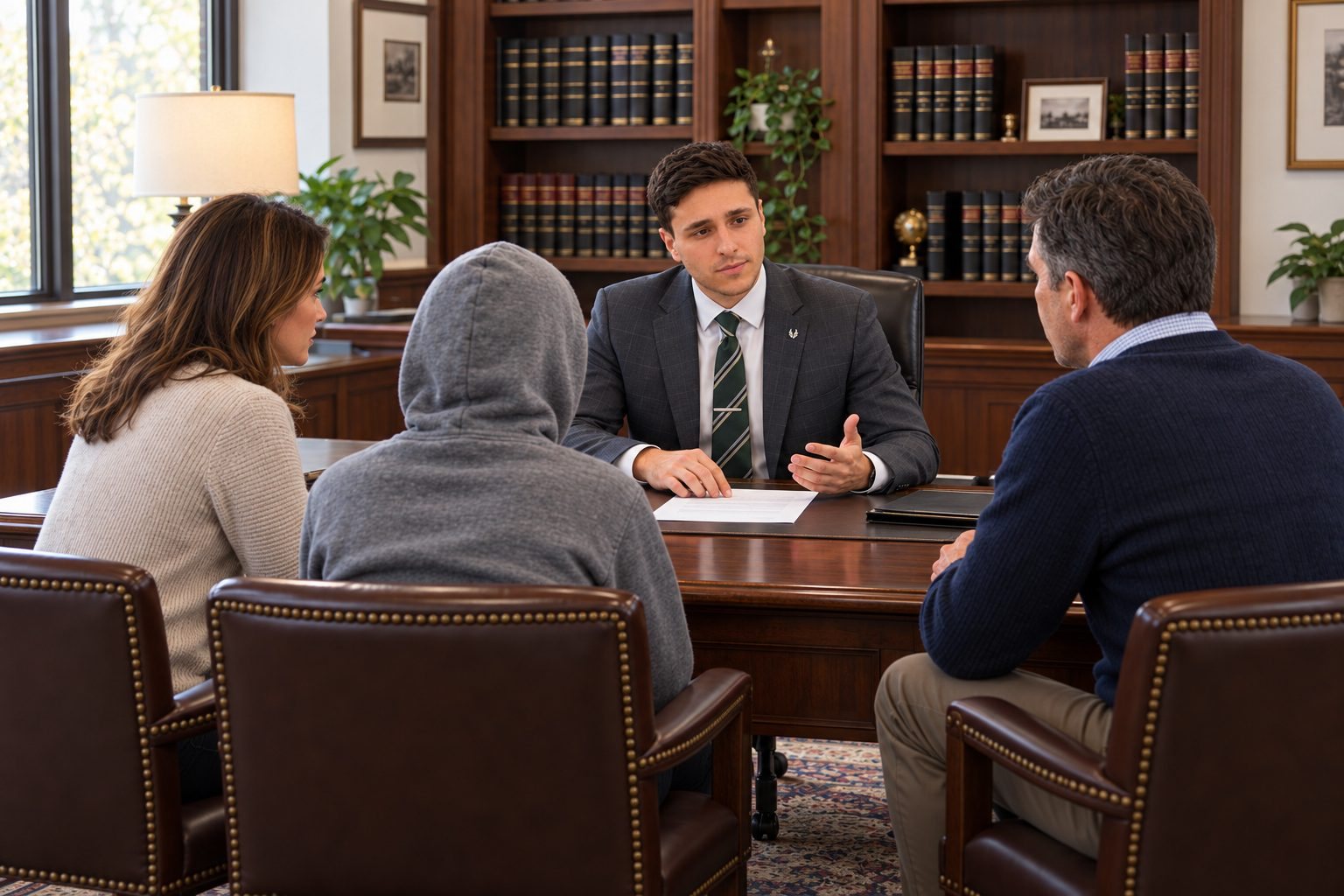
Abusers often say the same two things: you cannot do anything without me, and if you try, I will know. On a VAWA self-petition, the first is not the law, and the second does not have to be true.
USCIS says it plainly on its Form I-360 page: "You may self-petition under VAWA by filing Form I-360 without your abusive family member's knowledge or consent" (uscis.gov/i-360, as read October 2026). This article covers two questions survivors often ask. Can I file while I still live with the abuser, or am still married? And how does the case stay private? We answer each with what the sources say, and we say where the law stops.
You can file while you still live together

You do not have to move out before you file. The Policy Manual says self-petitioners "must have resided with the abuser at some point prior to filing the self-petition or reside with the abuser when filing the self-petition" (3 USCIS-PM D.2(F)). It adds that there is no requirement to be living with the abuser at the time of filing (3 USCIS-PM D.2(F)). The Form I-360 instructions list the element the same way: you are now residing with, or have resided with, the abuser in the past (Form I-360 Instructions, ed. 01/20/25).
What the element does require is that you lived together during the marriage or other qualifying relationship, for any length of time (INA 204(a)(1)(A)(iii)(II)(dd), (B)(ii)(II)(dd); 3 USCIS-PM D.2(F)). Since PA-2025-33, a visit while you lived elsewhere does not count (3 USCIS-PM D.2(F); PA-2025-33). For abused children and parents, the statute says "resides, or has resided" (INA 204(a)(1)(A)(iv), (A)(vii)(IV)).
You can file while you are still married
For a spouse, being married is not a problem. It is the usual starting point. A self-petitioning spouse must have a legally valid marriage to the abusive citizen or permanent resident when the self-petition is filed (3 USCIS-PM D.3(A)(1)). The exception is the former spouse, who may file within 2 years after the marriage ended if the end of the marriage is connected to the abuse (INA 204(a)(1)(A)(iii)(II)(aa)(CC)(ccc), (B)(ii)(II)(aa)(CC)(bbb)). After you file, a divorce does not affect the petition (INA 204(a)(1)(A)(vi), (B)(v)(I)).
The opposite situation is also covered. If you have already separated, USCIS does not deny a self-petition solely because the spouses are not currently living together (3 USCIS-PM D.2(C)). The question for good faith is whether, when you married, you both intended to build a life together (3 USCIS-PM D.2(C)).
What the sources do not say
The statute, the Policy Manual and the form speak about the legal marriage and about residence. They do not ask whether you still love the person, still hope things change, or still share a bed or a bank account. None of the sources we read lists staying in the relationship as a reason to deny. The elements are what decide the case.
We never tell anyone to leave or to stay. Each choice has effects on the case, and a safety plan is made with a domestic violence advocate. See living with the abuser.
What 8 U.S.C. 1367 protects

Section 1367 is the federal confidentiality law for VAWA, T and U cases. It does three things.
- Nondisclosure. DHS, DOJ and the State Department may not use or disclose information about a person with a VAWA application to anyone, except their own sworn officers and employees acting for legitimate agency purposes, and except as subsection (b) allows (8 U.S.C. 1367(a)(2)). Subsection (b) covers narrow uses such as law enforcement, judicial review, benefit agencies, congressional oversight and national security (8 U.S.C. 1367(b)(1)-(8)).
- The abuser's word alone. The agencies may not make an adverse decision on admissibility or deportability using information furnished only by the abuser, or by a household family member who abused you with the abuser's consent or acquiescence. That rule does not apply if you have been convicted of a crime listed in INA 237(a)(2) (8 U.S.C. 1367(a)(1)).
- A penalty. A violation brings disciplinary action and a civil penalty of up to $5,000 per violation (statutory amount) (8 U.S.C. 1367(c)).
The I-360 instructions repeat the point: if the petition is filed under VAWA, its information is protected under 8 U.S.C. 1367, and any sharing with federal, state, local or foreign agencies follows that law (Form I-360 Instructions, ed. 01/20/25, Privacy Act notice). USCIS now routes VAWA I-360s to a lockbox marked "Attn: 1367," by the state you live in (USCIS, Certain VAWA, T and U Filing Locations, changed October 7, 2026). We link the filing-locations page rather than print an address that changes.
The law also reaches enforcement. If an enforcement action leading to removal proceedings took place at a domestic violence shelter, a rape crisis center, a family justice center or another listed place, or at a courthouse in connection with a protection-order or custody case, the Notice to Appear must state that 1367 was complied with (INA 239(e)). See enforcement at protected places.
Where 1367 stops

- The abuser's-word rule is narrower than it sounds. Under USCIS Policy Alert PA-2025-34 (December 22, 2025), USCIS applies it only to adverse admissibility or deportability determinations, not, for example, to the denial of an I-360, I-751 or I-765V. In applying the conviction exception, USCIS does not consider available waivers (PA-2025-34; 1 USCIS-PM A.7).
- It ends. Protection ends when the application is denied and all appeals are exhausted (8 U.S.C. 1367(a)(2)). USCIS also treats it as ending at naturalization (PA-2025-34).
- It binds federal agencies, not everyone. Our reading of its scope: 1367 does not stop anyone from calling ICE, and it does not bind a state family or criminal court. What you file in a divorce or custody case can be read by the other side.
Read VAWA confidentiality under 8 U.S.C. 1367 and the PA-2025-34 limits for the detail.
Mail: the part most likely to give a case away
When an abuser learns about a case, it is usually through something that arrives at home. The form gives you a way around that.
- A safe mailing address. If you do not feel safe receiving mail about the petition at home, give an alternate or safe mailing address in Part 1, Item Number 7 of the I-360. It may be a post office box, a friend's address, your attorney, a community organization helping you, or any address where you can "safely and punctually receive mail." If you give none, USCIS may use your preparer's address (Form I-360 Instructions, ed. 01/20/25). The uscis.gov/i-360 page repeats this for VAWA self-petitioners.
- Moving. A non-citizen must report a new address within 10 days of moving, through uscis.gov/addresschange, and not to the lockbox (Form I-360 Instructions, ed. 01/20/25). If your safe address changes, tell us first so every notice follows you.
- A pending green card case through the abuser. If the abuser filed an I-130 for you and your I-485 is pending, you can notify the field office, with a safe address, that you filed or will file a self-petition within 30 days, and ask USCIS to hold the I-485. Section 1367 protection applies once you give that notice (3 USCIS-PM D.5(E)).
Notices can include a biometrics appointment and, sometimes, an interview at a field office (3 USCIS-PM D.5(C)). Missing an appointment can lead to denial unless a change of address or rescheduling request arrived first (8 C.F.R. 103.2(b)(13)(ii)). A safe address only works if someone checks it and tells you quickly. Agree on that before you file.
Our safe filing checklist walks through the address, the phone, and where copies are kept.
Phones, accounts and devices
This part is not law. It is the practical side, and a domestic violence advocate can help you plan it.
- A phone the abuser does not know. A shared family plan can show call logs. If you cannot use a safe phone, a friend's or a work phone is an option. Tell us which number is safe and whether we may leave a message.
- A new email account, created on a device the abuser does not use, with a recovery number that is yours alone.
- Location sharing. Check whether your phone shares your location, and whether a family account or a car does too.
- Cloud backups. Photos and documents on a phone may also copy to a shared account or computer.
- Paper. Keep copies of your filing somewhere outside the home, with your lawyer or a person you trust.
- This website. The Leave site button closes the page fast, but it does not erase your history. Read staying safe online.
Be careful with sudden changes. A history that is suddenly empty, or a phone that is suddenly locked, can draw attention. Plan the timing with an advocate.
If the abuser finds out anyway

Sometimes it happens. The abuser knowing is not one of the elements, and the elements decide the case. Two common reactions have their own pages.
- A call to ICE. The information-from-the-abuser rule in 8 U.S.C. 1367(a)(1) still applies to admissibility and deportability decisions, within the PA-2025-34 limits. Read the abuser called ICE.
- A police report or charge against you. Abusers sometimes file first. Talk to your criminal lawyer before you write anything down, and read arrested or charged.
The firm never contacts the abuser, the abuser's lawyer or the abuser's family about your case.
If you are in danger now
Call 911. The National Domestic Violence Hotline is 1-800-799-7233, or text START to 88788. An advocate can help you make a safety plan that fits a home you still share.
A short plan before you file
- Choose the safe mailing address, and who checks it.
- Choose the safe phone and email, and tell us when it is safe to call.
- Decide where your copies will live.
- Tell us about any arrest, charge, family court case or protective order, on either side.
- Make a safety plan with an advocate, for the day the abuser might find out.
Read next: will my abuser find out, the safe filing checklist, staying safe online, or confidentiality.
Common questions
Will USCIS tell my spouse that I filed?
USCIS says you may self-petition by filing Form I-360 without your abusive family member's knowledge or consent (USCIS Form I-360 page, as read October 2026). Federal law also bars the immigration agencies from disclosing information about your VAWA case to anyone, with limited exceptions (8 U.S.C. 1367(a)(2), (b)). That law does not stop the abuser from learning about the case at home, which is why the mailing address matters.
Do I have to leave the abuser before I file?
No. The Policy Manual says self-petitioners must have resided with the abuser before filing or reside with the abuser when filing, and that there is no requirement to be living with the abuser at the time of filing (3 USCIS-PM D.2(F)). Whether to stay or leave is your decision, made with an advocate's help on safety.
Do I have to divorce first?
No. A spouse filing as a current spouse must have a legally valid marriage to the abuser when the self-petition is filed (3 USCIS-PM D.3(A)(1)). A former spouse may file within 2 years after the marriage ended, if the end of the marriage is connected to the abuse (INA 204(a)(1)(A)(iii)(II)(aa)(CC)(ccc), (B)(ii)(II)(aa)(CC)(bbb)).
What address do I put on the form if I live with the abuser?
The I-360 lets a VAWA self-petitioner give an alternate or safe mailing address in Part 1, Item Number 7: a post office box, a friend, an attorney, a community organization helping you, or any address where you can safely and punctually receive mail (Form I-360 Instructions, ed. 01/20/25). If you give none, USCIS may use your preparer's address.
Can the abuser's call to ICE be used against me?
DHS, DOJ and the State Department may not make an adverse admissibility or deportability decision using information furnished only by the abuser, unless you have been convicted of a crime listed in INA 237(a)(2) (8 U.S.C. 1367(a)(1)). Since PA-2025-34, USCIS applies that rule only to those determinations, not, for example, to the decision on an I-360. The law does not stop anyone from calling ICE; that is our reading of its scope.
The lawyers who will handle your case
One of them calls you back, privately, on your terms.
Talk to a lawyer privately. You decide how we reach you.
Tell us a safe number or email and a safe time, and whether we can leave a message. We never contact the person who hurt you, and we never call from a number or send anything that names this site. The first conversation is free and confidential, in English, Russian, Spanish or Uzbek, with a live interpreter for any other language.