
VAWA confidentiality under 8 U.S.C. 1367: what is protected and what is not
Federal law bars the government from disclosing your VAWA case to the abuser or anyone else, with limited exceptions, and from acting against you on the abuser's word alone. It is a real protection, and it has edges. Since December 2025, USCIS reads some of them more narrowly. This article sets out both sides exactly.
Current as of October 2026. We re-check this page every quarter and after any change in the law.
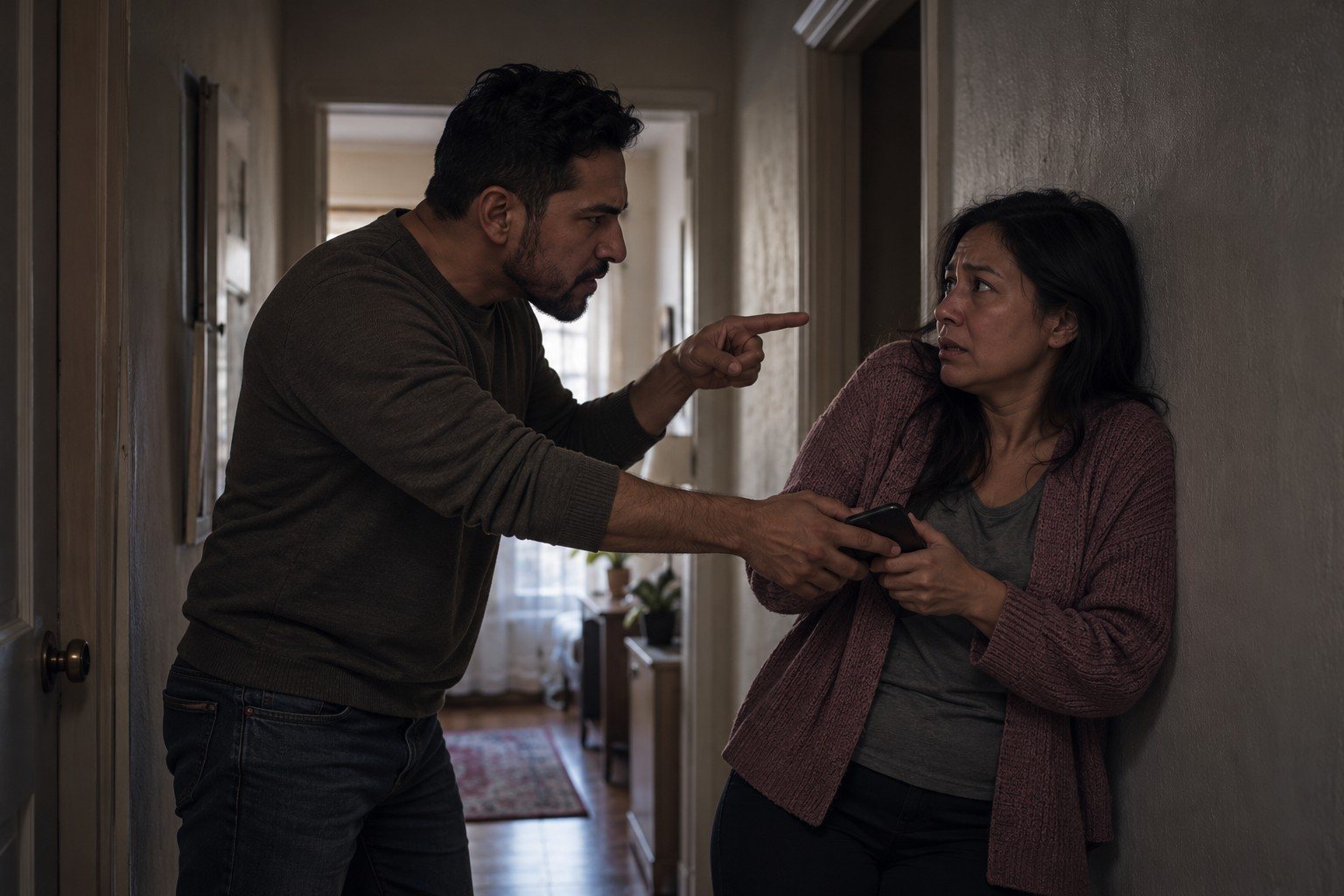
The fear that stops many survivors from filing is simple: "What if they find out?" The law that answers it is 8 U.S.C. 1367, usually called VAWA confidentiality. It is among the strongest privacy rules in immigration law. It is also easy to overstate, and an overstated promise can put someone in danger. So this article does two things. It says exactly what 1367 protects, with the statute's own terms, and it says just as exactly what it does not.
For the shorter version, see confidentiality and will my abuser find out.
Who the statute protects

Section 1367 covers a person with a VAWA self-petition (as defined in INA 101(a)(51)), a T or U visa application, or an application for VAWA cancellation of removal under INA 240A(b)(2) (8 U.S.C. 1367(a)(2)). It binds the Department of Homeland Security, which includes USCIS and ICE, the Department of Justice, which includes the immigration courts, and the Department of State (8 U.S.C. 1367(a)).
When the protection starts in cases that began another way
Many survivors are already in a case the abuser started. Two situations come up often.
- A green card application on the abuser's petition. If you have a pending I-485 based on the abuser's I-130, you can notify the USCIS field office that you filed, or will file within 30 days, a self-petition, and ask USCIS to hold the I-485 and switch its basis. Section 1367 protection applies once you give that notice (3 USCIS-PM D.5(E)). Use a safe address on the notice.
- A conditional green card. If you file the I-751 to remove conditions and claim the battery or extreme cruelty waiver along with other bases, USCIS approves on the abuse basis first, and 1367 confidentiality covers the whole petition (6 USCIS-PM I.5(C)). See the I-751 waiver.
In immigration court, an application for VAWA cancellation under INA 240A(b)(2) is itself covered (8 U.S.C. 1367(a)(2)). See VAWA in deportation proceedings.
The statute has two main rules, and they work differently.
Rule 1: Nondisclosure

The government may not use or disclose information about a protected person to anyone, except its own sworn officers and employees acting for legitimate agency purposes, and except as subsection (b) of the statute allows (8 U.S.C. 1367(a)(2)).
The exceptions in subsection (b)
Subsection (b) lists the situations in which information may be shared (8 U.S.C. 1367(b)(1)-(8)):
- statistical uses of the kind the Census Bureau makes;
- law enforcement purposes;
- judicial review of a determination;
- a waiver by the protected person, where everyone protected is an adult;
- federal, state and local agencies deciding public benefits under 8 U.S.C. 1641(c);
- congressional oversight;
- referrals, with your consent, to providers of services for survivors; and
- national security purposes.
The abuser, the abuser's lawyer and the abuser's family are not on that list. Neither is your employer, your landlord or your home country's government.
When nondisclosure ends
Under the statute, the protection ends when the application is denied and all appeals are exhausted (8 U.S.C. 1367(a)(2)). Under USCIS Policy Alert PA-2025-34 (Dec. 22, 2025), USCIS also treats 1367 protection as ending at naturalization. If you become a citizen, plan on that.
A violation can bring disciplinary action and a civil penalty of up to $5,000 per violation (statutory amount) (8 U.S.C. 1367(c)).
Rule 2: No adverse action on the abuser's word alone

DHS, the Justice Department and the State Department may not make an adverse determination of admissibility or deportability using information furnished solely by the abuser, or by a member of the household who abused you or your child with the abuser's consent or acquiescence (8 U.S.C. 1367(a)(1)). For T and U cases, the same applies to information from the trafficker or perpetrator.
The rule has a built-in exception. It does not apply if you have been convicted of a crime listed in INA 237(a)(2) (8 U.S.C. 1367(a)(1)).
How PA-2025-34 narrowed USCIS's reading
On December 22, 2025, USCIS issued Policy Alert PA-2025-34 and revised its Policy Manual, Vol. 1, Part A, ch. 7. Three points matter:
- Only admissibility and deportability. USCIS applies the prohibited-source rule only when it makes an adverse admissibility or deportability determination. It does not apply it, for example, to the denial of an I-360, I-751 or I-765V (PA-2025-34; 1 USCIS-PM A.7).
- No credit for available waivers. In deciding whether the 237(a)(2) conviction exception applies, USCIS does not consider waivers that might be available (PA-2025-34).
- An end date at naturalization. USCIS treats 1367 protection as ending when the person naturalizes (PA-2025-34).
As of October 26, 2026, the USCIS Policy Manual updates page showed no rescission or court stay of PA-2025-34. For how this alert fits with the self-petition changes issued the same day, read the December 2025 VAWA policy changes.
What that means in practice
If the abuser writes to USCIS claiming the marriage was a fraud, USCIS does not read 1367(a)(1) as barring it from weighing that claim on the I-360 itself. The protection against the abuser's word is real when DHS decides whether you can be admitted or deported. On the petition, the answer is your own evidence: a detailed declaration, records, and statements from people who knew you. See how to prepare a VAWA declaration.
If you have any conviction, the analysis has to happen before filing. Talk to your criminal lawyer before you write anything down about an arrest or charge, and see arrested or charged.
A related rule: enforcement at protected places
A separate statute backs up 1367. If an enforcement action leading to removal proceedings took place at a domestic violence shelter, a rape crisis center, a supervised visitation center, a family justice center, a victim services provider or a community-based organization, the Notice to Appear must state that 8 U.S.C. 1367 was complied with (INA 239(e)). The same applies to an action at a courthouse, or in connection with a courthouse appearance, if you were appearing in a protection-order case, a child custody case, or another civil or criminal case relating to domestic violence, sexual assault, trafficking or stalking in which you were battered or subjected to extreme cruelty (INA 239(e)). A knowingly false certification is penalized under 1367(c).
If you were arrested at one of these places, tell your lawyer exactly where and when. See enforcement at protected places.
What 1367 does not do
These limits are our reading of the statute's scope. Subsection (a) is addressed to officials and employees of the Justice Department, DHS and the State Department, and to no one else.
- It does not stop anyone from calling ICE. The abuser, the abuser's family or anyone else can still make a report. What 1367(a)(1) limits is how the government may use information that comes only from them. See the abuser called ICE.
- It does not bind state courts. A family court or a criminal court is not covered. Papers you file in a divorce, custody or protective-order case can be seen by the other side under that court's rules. Plan what goes into each case. See divorce, custody and VAWA.
- It does not control what happens at home. A receipt notice in the mailbox, a copy of your declaration on a shared computer, a call from a lawyer's office on a phone the abuser checks: none of that is the government's disclosure, and 1367 cannot reach it.
- It does not cover what you share yourself. If you give a copy of your declaration to a relative, a friend or a lawyer in another case, the statute does not follow it. Before you hand anything over, ask who else might see it and whether the abuser could. When in doubt, ask us first.
- It does not guarantee a decision. Confidentiality protects your information. It does not change what you must prove.
Closing the gaps the statute leaves
Because 1367 governs the government, the rest is up to planning. The steps below are practical, not legal requirements.
- A safe mailing addressUSCIS sends notices where you tell it to. Use an address the abuser cannot reach.Choose it before you file, and tell us if it changes.
- A safe phone and emailOne the abuser does not pay for, share or check.Tell us the times and ways it is safe to reach you, and we will keep to them.
- Where copies liveNot at home, not in a shared cloud account.We can hold your copies.
- The filing itselfVAWA I-360s now go to a USCIS lockbox marked "Attn: 1367," chosen by your state (uscis.gov, Certain VAWA, T and U filing locations, changed Oct. 7, 2026).Check the I-360 page on the day you mail.
- A pending I-485 on the abuser's petitionOnce you notify USCIS that you filed or will file a self-petition, 1367 protection applies to that case (3 USCIS-PM D.5(E)).Use a safe address on the notice.
The safe filing checklist covers each of these, and staying safe online covers the device you are using now.
Safety planning
A safety plan is made with a domestic violence advocate. The National Domestic Violence Hotline is 1-800-799-7233, or text START to 88788. If you are in danger now, call 911.
For our part: we never contact the abuser, the abuser's lawyer or the abuser's family. You choose how we reach you. See a private consultation.
Read next: confidentiality, will my abuser find out, the safe filing checklist, or threats of deportation.
Common questions
Will USCIS tell my abuser that I filed?
Under 8 U.S.C. 1367(a)(2), DHS, the Justice Department and the State Department may not use or disclose information about your VAWA application to anyone, except their own sworn officers and employees for legitimate agency purposes and in the specific situations listed in 8 U.S.C. 1367(b). The abuser is not on that list. The rule binds the government; it cannot stop the abuser from guessing or from finding papers at home.
Can the abuser's accusations be used against me?
The government may not make an adverse admissibility or deportability determination using information furnished solely by the abuser or by an abusive household family member acting with the abuser's consent or acquiescence (8 U.S.C. 1367(a)(1)). The rule does not apply if you have been convicted of a crime listed in INA 237(a)(2). Under PA-2025-34, USCIS does not apply it to the denial of an I-360, I-751 or I-765V.
Does 1367 protect me in family court?
In our reading, no. The statute is addressed to federal officials at DHS, the Justice Department and the State Department. It does not bind a state family court or criminal court, so what you file there follows that court's own rules.
How long does the protection last?
Nondisclosure ends when the application is denied and all appeals are exhausted (8 U.S.C. 1367(a)(2)). Under PA-2025-34, USCIS also treats 1367 protection as ending when you naturalize.
What happens if an official breaks the rule?
The statute provides for disciplinary action and a civil penalty of up to $5,000 per violation (statutory amount) (8 U.S.C. 1367(c)).
The lawyers who will handle your case
One of them calls you back, privately, on your terms.
Talk to a lawyer privately. You decide how we reach you.
Tell us a safe number or email and a safe time, and whether we can leave a message. We never contact the person who hurt you, and we never call from a number or send anything that names this site. The first conversation is free and confidential, in English, Russian, Spanish or Uzbek, with a live interpreter for any other language.