
Filing a VAWA self-petition from outside the United States
You can file a VAWA self-petition while you live abroad in three situations: the abuser works for the U.S. government, the abuser is a member of the uniformed services, or the abuse happened in the United States. If USCIS approves, the case moves to an immigrant visa abroad. Here is what the statute, the Policy Manual and the form instructions say.
Current as of October 2026. We re-check this page every quarter and after any change in the law.
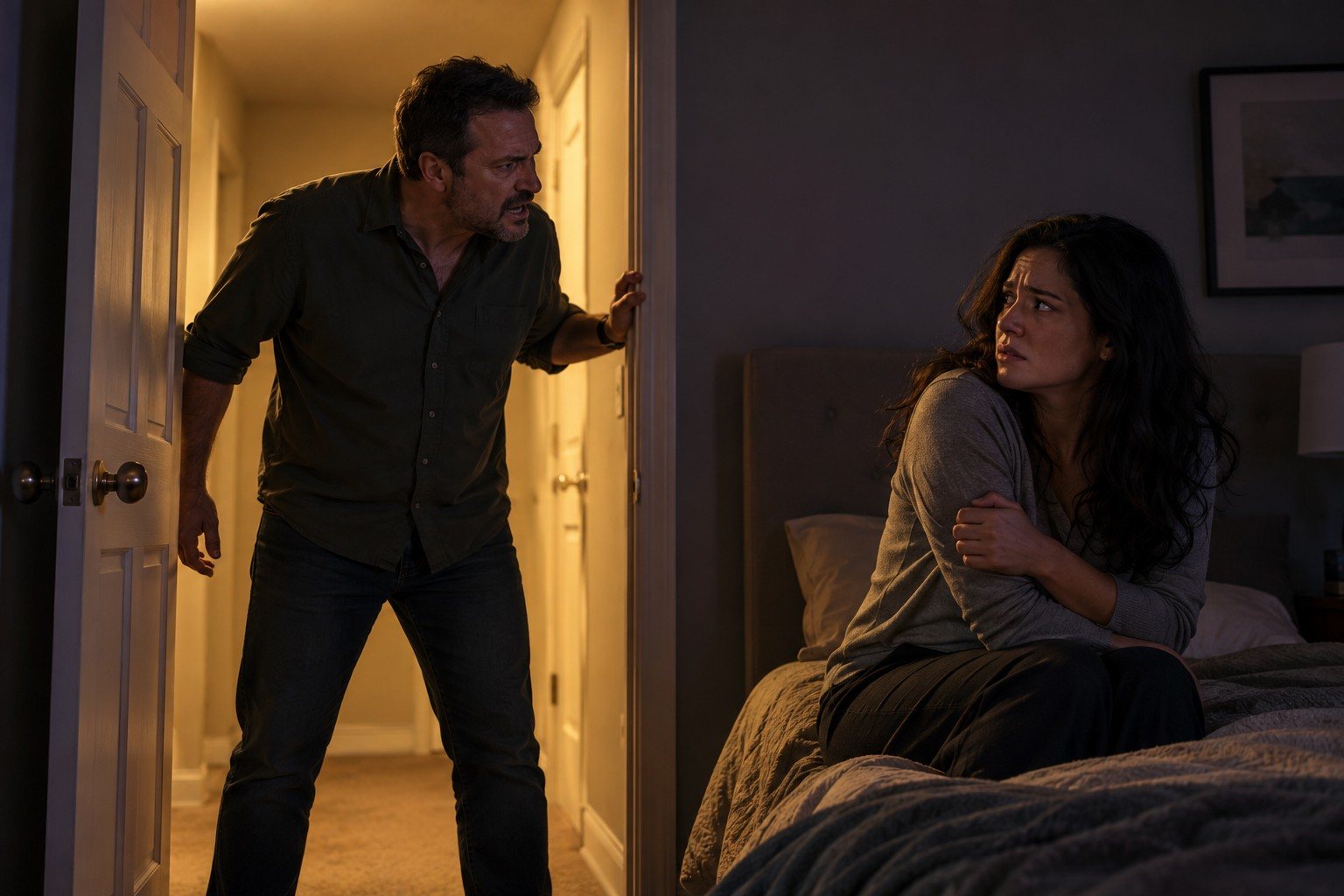
Some survivors are outside the United States when they first learn about VAWA. Some left to get away. Some were taken abroad by the abuser, or sent back and told not to return. Some married a U.S. citizen or green card holder who is stationed overseas. The question is the same for each of them: can I file from here?
The answer is yes in three situations, and only in those three. This article sets out the rule in the statute's own words, how the USCIS Policy Manual reads it, what stays the same when you file from abroad, and what happens after approval. Where the sources stop, we say so.
The three situations

Congress wrote a separate clause for survivors living abroad. It covers a "spouse, intended spouse, or child living abroad" of a U.S. citizen or a lawful permanent resident (INA 204(a)(1)(A)(v), (B)(iv); 8 U.S.C. 1154(a)(1)(A)(v), (B)(iv)). That person may file if the abuser fits one of three descriptions.
| The statute | How the Policy Manual says it | Authority |
|---|---|---|
| The abuser is an employee of the United States Government | The abuser is employed abroad by the U.S. government | INA 204(a)(1)(A)(v)(I)(aa), (B)(iv)(I)(aa); 3 USCIS-PM D.2(H) |
| The abuser is a member of the uniformed services, as defined in 10 U.S.C. 101(a) | The abuser is a member of the uniformed services stationed outside the United States | INA 204(a)(1)(A)(v)(I)(bb), (B)(iv)(I)(bb); 3 USCIS-PM D.2(H) |
| The abuser subjected you or your child to battery or extreme cruelty in the United States | The claimed battery or extreme cruelty occurred in the United States | INA 204(a)(1)(A)(v)(I)(cc), (B)(iv)(I)(cc); 3 USCIS-PM D.2(H) |
The Form I-360 instructions say the same thing in plain terms: if you are living abroad when you file, you may file if the abuser is a U.S. government employee, the abuser is a member of the uniformed services, or you were subjected to battery or extreme cruelty in the United States (Form I-360 Instructions, ed. 01/20/25).
The third situation matters most to people who left. If the abuse happened here, leaving the country to be safe does not by itself close this door. The first two matter to families who live on or near an overseas base or post, where the abuser's job is the reason the family is abroad at all.
The Policy Manual says you must show one of the three "in addition to the eligibility requirements" for a self-petition (3 USCIS-PM D.2(H)). So the abroad rule is a door to filing, not a shortcut past the elements.
Why there is a rule at all
The old VAWA regulation said a self-petition would not be approved if the self-petitioner was not living in the United States. That text is still printed at 8 C.F.R. 204.2(c)(1)(v), but the Policy Manual says the Victims of Trafficking and Violence Protection Act of 2000 removed the requirement and superseded that part of the regulation (3 USCIS-PM D.2, fn. 137). What the statute has now is the narrower rule above: a person living abroad may file in the three listed situations (INA 204(a)(1)(A)(v), (B)(iv)).
Shared residence is a separate question
Every spouse must have lived with the abuser during the marriage, with no minimum period (INA 204(a)(1)(A)(iii)(II)(dd), (B)(ii)(II)(dd); 3 USCIS-PM D.2(F)). If you are in the United States when you file, the home you shared can have been in the United States or abroad (3 USCIS-PM D.2(F)). Since PA-2025-33, USCIS reads the element as residence during the qualifying relationship itself, and a visit while you lived elsewhere does not count (3 USCIS-PM D.2(F); PA-2025-33). If you file from abroad, we look at how this element applies to your facts before anything is filed.
Who the clause names
The statute's abroad clause names spouses, intended spouses and children (INA 204(a)(1)(A)(v), (B)(iv)). It does not mention parents. The Policy Manual fills that gap: it says there is no statutory requirement that a self-petitioning parent be living in the United States, and that the abroad rules in INA 204(a)(1)(A)(v) apply to an abused parent of a U.S. citizen son or daughter (3 USCIS-PM D.2, fn. 175). We explain that in abused parents and filing from abroad.
What stays the same when you file from abroad

The petition is the same Form I-360, and the elements are the same. A spouse still shows a marriage entered in good faith, battery or extreme cruelty during the marriage, shared residence during the marriage, and good moral character (INA 204(a)(1)(A)(iii), (B)(ii); 3 USCIS-PM D.2). The abuser must generally have been a U.S. citizen or permanent resident at the time of the abuse and when you file (3 USCIS-PM D.2(B)(1)).
- The two-year windows still run. A former spouse files within 2 years after the marriage ended, with a connection between the end of the marriage and the abuse (INA 204(a)(1)(A)(iii)(II)(aa)(CC)(ccc), (B)(ii)(II)(aa)(CC)(bbb)). The 2 years has no waiver or tolling (3 USCIS-PM D.3(A)(1)). Being abroad does not stop the clock.
- Good moral character evidence covers every country. The Policy Manual asks for a police clearance or background check for each place, in or outside the United States, where you lived 6 months or more in the 3 years before filing. If one is not available, you explain why (3 USCIS-PM D.2(G)(3), D.4(B)).
- Translations. Every foreign-language document needs a full English translation, certified by the translator as complete and accurate (8 C.F.R. 103.2(b)(3)).
- Any credible evidence. USCIS must consider any credible evidence, and the weight is its call (INA 204(a)(1)(J); 8 C.F.R. 204.2(c)(2)(i)). Records from another country count.
- Your children. A self-petitioning spouse may include children who are unmarried and under 21 at filing, whether or not they were abused (INA 204(a)(1)(A)(iii), (B)(ii); 3 USCIS-PM D.2(I)). A parent may not include derivatives (3 USCIS-PM D.2(I)).
- No filing fee. There is no government filing fee for a VAWA Form I-360 (8 C.F.R. 106.2(a)(17)(ii), as of October 2026).
Where the package is mailed changed on October 7, 2026. VAWA I-360s now go to a USCIS lockbox marked "Attn: 1367," chosen by the state you live in, with a grace period for packages postmarked by November 9, 2026 (USCIS, Certain VAWA, T and U Filing Locations). The page is written around U.S. states, so a person filing from abroad should confirm the right address with us or on the USCIS filing-locations page before mailing. We do not print the address here because it changes.
If USCIS needs your fingerprints and photo, and you are overseas, the appointment notice tells you to contact a U.S. Embassy, U.S. Consulate or USCIS office outside the United States to schedule it (Form I-360 Instructions, ed. 01/20/25).
After approval: the immigrant visa
The Policy Manual is short on this point: if USCIS approves the self-petition and a visa is available, the self-petitioner may apply for an immigrant visa to enter the United States as a permanent resident (3 USCIS-PM D.2(H)). If the self-petitioner seeks an immigrant visa from outside the United States, USCIS forwards the approved petition to the National Visa Center (3 USCIS-PM D.5(D)(2); 8 C.F.R. 204.2(c)(3)(i), (e)(3)(i)).
| Who abused you | When a visa is available | Authority |
|---|---|---|
| A U.S. citizen spouse, parent, or son or daughter | Right away: you are an immediate relative, with no Visa Bulletin wait | 3 USCIS-PM D.5(D)(2); INA 201(b)(2)(A)(i) |
| A green card holder spouse or parent | When your priority date is current in the Visa Bulletin | 3 USCIS-PM D.5(D)(2); INA 203(a)(2)(A) |
We do not print Visa Bulletin dates. Check the current Visa Bulletin, or ask us to read it for you.
The steps after the file reaches the National Visa Center belong to the State Department, and we have not yet confirmed them for this site, so we do not describe them here. We walk through them with each client whose case is headed there.
Two things that work differently abroad
- No work permit on approval. The I-360 instructions say an approved self-petitioner who currently resides in the United States also receives employment authorization, category (c)(31) (Form I-360 Instructions, ed. 01/20/25). A person living abroad does not.
- No prima facie notice. USCIS does not issue a Notice of Prima Facie Case for a petition filed from abroad (8 C.F.R. 204.2(c)(6); 3 USCIS-PM D.5(A)). That notice matters mainly for certain public benefits inside the United States.
Some rules that help self-petitioners still matter at the visa stage. VAWA self-petitioners are exempt from the public-charge ground and need no Form I-864 affidavit of support (INA 212(a)(4)(C)(i), (E)(i)). Other grounds of inadmissibility, such as past unlawful presence in the United States, can apply. The 3- and 10-year bars do not apply where there is a substantial connection between the abuse and a violation of the terms of a nonimmigrant visa (INA 212(a)(9)(B)(iii)(IV)). If you ever spent time in the United States without status, tell us before you file.
If you are in the United States and thinking of leaving
This article is about people who are already abroad. If you are in the United States now, leaving can change your case in ways that are hard to undo. Since Matter of Delcarmen-Lara, 29 I&N Dec. 830 (BIA 2026), even a trip on advance parole counts as a departure for the unlawful-presence bars, so a person with more than 180 days of unlawful presence may be inadmissible on return (USCIS Form I-131 page, as read October 2026). Leaving without advance parole while a green card application is pending generally abandons it (8 C.F.R. 245.2(a)(4)(ii)). Read travel and advance parole and talk to us before any trip.
We do not tell anyone to leave or to stay. Each choice has effects on the immigration case, and a safety plan is made with a domestic violence advocate.
Staying safe while you are abroad

Distance does not always mean safety. The abuser may still know your address, your family, or your accounts. A few things protect the case and you.
- A safe mailing address. The I-360 lets a VAWA self-petitioner give an alternate or safe mailing address: a post office box, a friend, an attorney, a community organization helping you, or any address where you can safely and punctually receive mail. If you give none, USCIS may use your preparer's address (Form I-360 Instructions, ed. 01/20/25, Part 1, Item Number 7).
- Federal confidentiality. The immigration agencies may not disclose information about your VAWA case to anyone, with limited exceptions (8 U.S.C. 1367(a)(2), (b)). The I-360 instructions say information on a VAWA petition is protected under 1367, and any sharing with federal, state, local or foreign agencies follows that law (Form I-360 Instructions, ed. 01/20/25). Read how your case stays private for the limits.
- The abuser's workplace. When the abuser works for the U.S. government or serves in the uniformed services, the people around you may be the abuser's colleagues. Decide with us who, if anyone, needs to know, and how we reach you.
- Safe contact. Give us a phone number or email the abuser does not know, and tell us when it is safe to call. We work by phone and video. See staying safe online.
If you are in danger now
Call the local emergency number where you are. In the United States, call 911. The National Domestic Violence Hotline is 1-800-799-7233, or text START to 88788.
What we need to know first
Before we advise, we ask a short list of questions: where the abuse happened; whether the abuser works for the U.S. government or serves in the uniformed services; whether you are still married, and if not, when the marriage ended; where you have lived for the past three years; and whether you ever lived in the United States without status. Those answers decide whether the abroad rule fits and what the visa stage will look like. Tell us only what is safe to share through the channel you are using.
Read next: survivors living outside the United States, abused parents and filing from abroad, the VAWA green card, step by step, or the safe filing checklist.
Common questions
I left the United States to get away from the abuser. Can I still file?
You can file from abroad if the battery or extreme cruelty happened in the United States, or if the abuser is a U.S. government employee or a member of the uniformed services (INA 204(a)(1)(A)(v), (B)(iv); 3 USCIS-PM D.2(H)). You still have to meet every other element, and the timing rules still apply. Tell us when you left and when the marriage ended, if it did.
The abuse happened only abroad, and the abuser is not in the military or government service. Can I file from where I am?
Not under the rule for filing from abroad. The statute and the Policy Manual list only the three situations (INA 204(a)(1)(A)(v), (B)(iv); 3 USCIS-PM D.2(H)). If you are in the United States when you file, a shared home abroad can count toward the residence element (3 USCIS-PM D.2(F)). Other options may exist; talk to us before you decide anything.
Does it cost anything to file the I-360 from abroad?
There is no government filing fee for a VAWA Form I-360 (8 C.F.R. 106.2(a)(17)(ii), as of October 2026). Legal fees are separate and are set out in writing before any work starts.
Will I get a work permit if USCIS approves my petition while I live abroad?
The I-360 instructions say the approval comes with employment authorization if you currently reside in the United States (Form I-360 Instructions, ed. 01/20/25). A person who lives abroad does not get the (c)(31) work permit on approval. The next step for you is the immigrant visa.
Where will USCIS send my notices if I am abroad?
To the mailing address you give. The I-360 instructions let a VAWA self-petitioner give an alternate or safe mailing address, such as a post office box, a friend, an attorney or an organization helping you (Form I-360 Instructions, ed. 01/20/25, Part 1, Item Number 7). Choose a place the abuser cannot reach, in any country.
The lawyers who will handle your case
One of them calls you back, privately, on your terms.
Talk to a lawyer privately. You decide how we reach you.
Tell us a safe number or email and a safe time, and whether we can leave a message. We never contact the person who hurt you, and we never call from a number or send anything that names this site. The first conversation is free and confidential, in English, Russian, Spanish or Uzbek, with a live interpreter for any other language.