
VAWA With USCIS or VAWA in Immigration Court
There are two different VAWA cases. One is the self-petition on Form I-360, decided by USCIS, followed by a green card application. The other is VAWA cancellation of removal, decided by an immigration judge in removal proceedings, with a special VAWA motion to reopen for people who already have a removal order. The requirements are not the same, and this page sets them side by side.
Current as of October 2026. We re-check this page every quarter and after any change in the law.
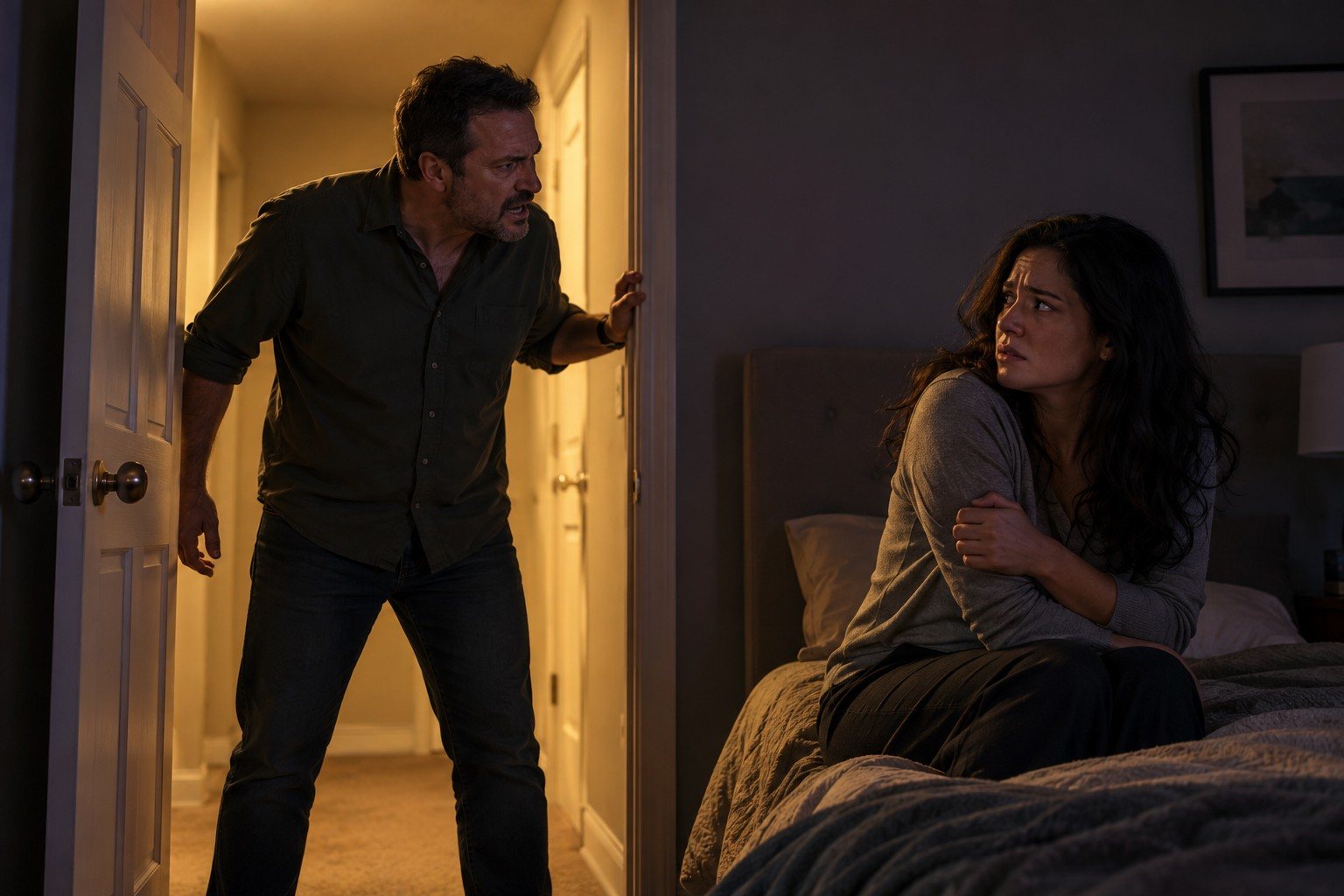
People often say "VAWA" as if it were one application. It is not. One VAWA case is a petition you file with USCIS by mail, outside any courtroom. The other is a defense an immigration judge decides inside removal proceedings. The abuser takes no part in either. Which one fits depends on whether you are in proceedings, who the abuser is to you, and what you can prove.

VAWA with USCIS: the self-petition
Who decides: USCIS, on paper, under INA 204(a)(1).
Which form: Form I-360, then Form I-485 to adjust status (INA 245(a)).
When you use it: you are a spouse, former spouse, intended spouse, child or parent abused by a U.S. citizen or green card holder, in court or not.
The outcome: an approved petition you can build a green card on.
The self-petition →
VAWA in court: cancellation and reopening
Who decides: an immigration judge, in removal proceedings, under INA 240A(b)(2).
Which form: Form EOIR-42B; or a VAWA motion to reopen under INA 240(c)(7)(C)(iv).
When you use it: you are in proceedings, or you have a removal order.
The outcome: the judge cancels removal and grants permanent residence, counted against an annual cap of 4,000 (INA 240A(e)(1), (e)(3)).
VAWA in court →The requirements, side by side

Each cell names the authority it comes from. These rules are stated as of October 2026.
| Question | Self-petition (USCIS) | VAWA cancellation (court) |
|---|---|---|
| Who decides | USCIS (INA 204(a)(1)). An appeal goes to the USCIS Administrative Appeals Office (uscis.gov AAO page) | An immigration judge (INA 240A(b)(2)), who must consider any credible evidence (INA 240A(b)(2)(D)) |
| Form | Form I-360, mailed to a USCIS lockbox marked "Attn: 1367" (uscis.gov VAWA, T and U filing locations page, October 7, 2026) | Form EOIR-42B, filed in your removal case (EOIR Forms and Fees page) |
| Must you be in proceedings? | No. Proceedings are not one of the elements in INA 204(a)(1)(A)(iii) or (B)(ii) | Yes. It is relief from removal, asked for in removal proceedings (INA 240A(b)(2)) |
| Qualifying relationship | Spouse, former spouse (within 2 years, abuse connected to the end of the marriage), intended spouse, unmarried child under 21, or parent of a citizen son or daughter 21 or older (INA 204(a)(1)(A)(iii), (iv), (vii); (B)(ii), (iii)) | Spouse or intended spouse; child of an abusive parent; or parent of a child abused by such a parent (INA 240A(b)(2)(A)(i)(I)-(III)) |
| Abuser's status | A U.S. citizen or green card holder at filing and at the time of the abuse, with 2-year exceptions for death or a loss of status tied to domestic violence (3 USCIS-PM D.2(B)(1); INA 204(a)(1)(A)(iii)(II)(aa)(CC)) | A spouse or parent who "is or was" a U.S. citizen or green card holder (INA 240A(b)(2)(A)(i)) |
| When the abuse happened | During the marriage, or for a child while under 21 and living with or visiting the parent (INA 204(a)(1)(A)(iii)(I); 3 USCIS-PM D.2(E)) | You "have been" battered or subjected to extreme cruelty by that spouse or parent (INA 240A(b)(2)(A)(i)) |
| Living together | Required at some point during the marriage, with no minimum period (INA 204(a)(1)(A)(iii)(II)(dd); PA-2025-33) | Not one of the elements listed in INA 240A(b)(2)(A) |
| Time in the U.S. | No minimum period. Filing from abroad is allowed only in the cases in INA 204(a)(1)(A)(v) and (B)(iv) | 3 years of continuous physical presence right before the application. The Notice to Appear does not stop the clock; a disqualifying offense does (INA 240A(b)(2)(A)(ii), (d)(1)) |
| Good moral character | Required, judged by INA 101(f), generally for the 3 years before filing, with an exception for acts connected to the abuse (INA 204(a)(1)(C); 3 USCIS-PM D.2(G)) | Required for the 3-year period, with a similar abuse-connected exception (INA 240A(b)(2)(A)(iii), (C)) |
| Extreme hardship | Not an element. Removed by VAWA 2000 (Pub. L. 106-386, sec. 1503(b)(1)(A)) | An element: extreme hardship to you, your child or your parent (INA 240A(b)(2)) |
| Bars | Marriage during proceedings unless good faith is proved by clear and convincing evidence, prior marriage fraud, and the 5-year rule for the abuser's earlier marriage (INA 204(g), (c), (a)(2)) | No inadmissibility under 212(a)(2) or (3), no deportability under 237(a)(1)(G), (2), (3) or (4), no aggravated felony (INA 240A(b)(2)(A)(iv)) |
| Government filing fee, as of October 2026 | None for the I-360 (8 C.F.R. 106.2(a)(17)(ii)). No fee for the VAWA I-485, I-765 and certain other forms (8 C.F.R. 106.3(b)(6)) | $1,640 for the EOIR-42B, plus a $30 government filing fee for biometrics, for filings postmarked on or after February 1, 2026 (EOIR Forms and Fees page; 91 FR 2561). A (c)(10) work permit and Form I-824 are fee-exempt (8 C.F.R. 106.3(b)(8)) |
| What you get | An approved petition; adjustment even without inspection and admission (INA 245(a)); a work permit (INA 204(a)(1)(K)); deferred action may be considered case by case (3 USCIS-PM D.5) | Removal cancelled and permanent residence granted, within the 4,000 annual cap (INA 240A(e)(1), (e)(3)); parole for a qualifying child or parent (INA 240A(b)(4)(A)) |
The dollar figures above are government filing fees, as of October 2026, not legal fees. Fees change; check the EOIR fees page and the Form I-360 page on uscis.gov before you file. We do not publish a figure for a court-side Form I-485 on a VAWA case, because we have not confirmed which fee applies.
Why the hardship rule confuses people
The self-petition regulation, 8 C.F.R. 204.2(c)(1)(i)(G), still lists extreme hardship. Congress removed it from the statute in 2000 (Pub. L. 106-386, div. B, title V, sec. 1503), and the USCIS Policy Manual, Vol. 3, Part D, says the statute controls. VAWA cancellation is a different law, INA 240A(b)(2), and it does require extreme hardship. Keep the two apart.

What each case asks you to prove

One line per element, with the authority. Your lawyer turns each line into evidence.
Requirements for the self-petition
- A qualifying relationship to a citizen or green card holder. INA 204(a)(1)(A)(iii), (iv), (vii); (B)(ii), (iii)
- For a spouse, a marriage entered in good faith. INA 204(a)(1)(A)(iii)(I)(aa); 3 USCIS-PM D.2(C)
- Battery or extreme cruelty to you or your child during the relationship. INA 204(a)(1)(A)(iii)(I)(bb); 8 C.F.R. 204.2(c)(1)(vi)
- You lived with the abuser during the relationship, for any length of time. INA 204(a)(1)(A)(iii)(II)(dd); PA-2025-33
- Good moral character. INA 204(a)(1)(C); INA 101(f); 3 USCIS-PM D.2(G)
- Eligible for immediate-relative or F2A classification. INA 204(a)(1)(A)(iii)(II)(cc), (B)(ii)(II)(cc)
- Each element proved more likely than not, with any credible evidence. INA 204(a)(1)(J); 3 USCIS-PM D.5(B)
Requirements for VAWA cancellation
- Battery or extreme cruelty by a spouse or parent who is or was a citizen or green card holder, or you are the parent of such a child. INA 240A(b)(2)(A)(i)
- 3 years of continuous physical presence before the application. INA 240A(b)(2)(A)(ii)
- Absences connected to the abuse do not break presence, but do not count toward it. INA 240A(b)(2)(B)
- Good moral character for that period. INA 240A(b)(2)(A)(iii), (C)
- No disqualifying criminal or security ground and no aggravated felony. INA 240A(b)(2)(A)(iv)
- Extreme hardship to you, your child or your parent. INA 240A(b)(2)
Can I do both?
Often, yes. Being in removal proceedings is not one of the self-petition elements in INA 204(a)(1), so a person in court can still file the I-360 with USCIS. The law also links the two: a person with an approved self-petition may adjust status even without inspection and admission or parole (INA 245(a)), and none of the INA 245(c) bars applies to them. The VAWA motion to reopen, below, can rest on either one.
Two cautions. A marriage entered while you were in removal proceedings bars approval of the self-petition unless you lived abroad for 2 years after the marriage or prove good faith by clear and convincing evidence (INA 204(g); 3 USCIS-PM D.3(C)). Which to file first, or both at once, is a decision to make with your lawyer before your next hearing.
If you already have a removal order
INA 240(c)(7)(C)(iv) gives survivors a VAWA motion to reopen. As of October 2026 its rules are:
- It must seek relief based on a VAWA self-petition (INA 204(a)(1)(A)(iii), (iv), (B)(ii) or (iii)), cancellation under INA 240A(b), or former INA 244(a)(3).
- It must be filed with the cancellation application or a copy of the self-petition.
- Deadline: 1 year from the final order. The limit can be waived for extraordinary circumstances or extreme hardship to your child.
- You must be physically present in the United States when you file.
- The usual one-motion limit in INA 240(c)(7)(A) does not block one such motion.
- Filing stays removal only for a "qualified alien" under 8 U.S.C. 1641(c)(1)(B), and only if the motion establishes that status. The stay lasts through final disposition, including appeals.
If you were arrested or charged with a crime, including on a complaint the abuser made, read arrested or charged and talk to your criminal lawyer before writing anything down. A criminal case can affect good moral character and the court bars above.
Where to go from here
For the USCIS side, start with who qualifies for the self-petition, then answer the element-by-element do I qualify questionnaire. It runs in your browser and keeps nothing. For the court side, read VAWA in immigration court, the full page on VAWA cancellation of removal, and the page on the VAWA motion to reopen.
Read next: VAWA cancellation, the VAWA motion to reopen, who qualifies, or do I qualify.
Common questions
Is VAWA cancellation the same thing as a VAWA self-petition?
No. The self-petition is a Form I-360 petition decided by USCIS under INA 204(a)(1). VAWA cancellation of removal is relief an immigration judge grants in removal proceedings under INA 240A(b)(2), on Form EOIR-42B. They have different elements, and only cancellation requires extreme hardship.
Do I have to show extreme hardship for the self-petition?
No. Congress removed extreme hardship from the self-petition statute in VAWA 2000 (Pub. L. 106-386, sec. 1503(b)(1)(A)). The old regulation, 8 C.F.R. 204.2(c)(1)(i)(G), still prints it, but the statute controls. VAWA cancellation in court is different: it does require extreme hardship to you, your child or your parent under INA 240A(b)(2).
How long do I need to have been in the United States?
For the self-petition there is no minimum period in the United States. The limits are on filing from abroad, which is allowed only in the cases listed in INA 204(a)(1)(A)(v) and (B)(iv). For VAWA cancellation you need 3 years of continuous physical presence immediately before the application under INA 240A(b)(2)(A)(ii), and the Notice to Appear does not stop that clock.
What does each one cost?
As of October 2026 there is no government filing fee for a VAWA Form I-360 (8 C.F.R. 106.2(a)(17)(ii)). As of October 2026 the government filing fee for Form EOIR-42B is $1,640 for filings postmarked on or after February 1, 2026, plus a $30 government filing fee for biometrics (EOIR Forms and Fees page; 91 FR 2561). These are government fees, not legal fees.
I already have a removal order. Which one is for me?
Possibly both, through the VAWA motion to reopen in INA 240(c)(7)(C)(iv). It is filed within 1 year of the final order, with the cancellation application or a copy of the self-petition, while you are physically present in the United States. The 1-year limit can be waived for extraordinary circumstances or extreme hardship to your child.
The lawyers who will handle your case
One of them calls you back, privately, on your terms.

Talk to a lawyer privately. You decide how we reach you.
Tell us a safe number or email and a safe time, and whether we can leave a message. We never contact the person who hurt you, and we never call from a number or send anything that names this site. The first conversation is free and confidential, in English, Russian, Spanish or Uzbek, with a live interpreter for any other language.