
The abuser was already married
If you went through a marriage ceremony with a U.S. citizen or green card holder in good faith, and the marriage turned out to be invalid only because they were already married to someone else, you may still self-petition. The law calls you an intended spouse. Their bigamy is not held against you.
Current as of October 2026. We re-check this page every quarter and after any change in the law.
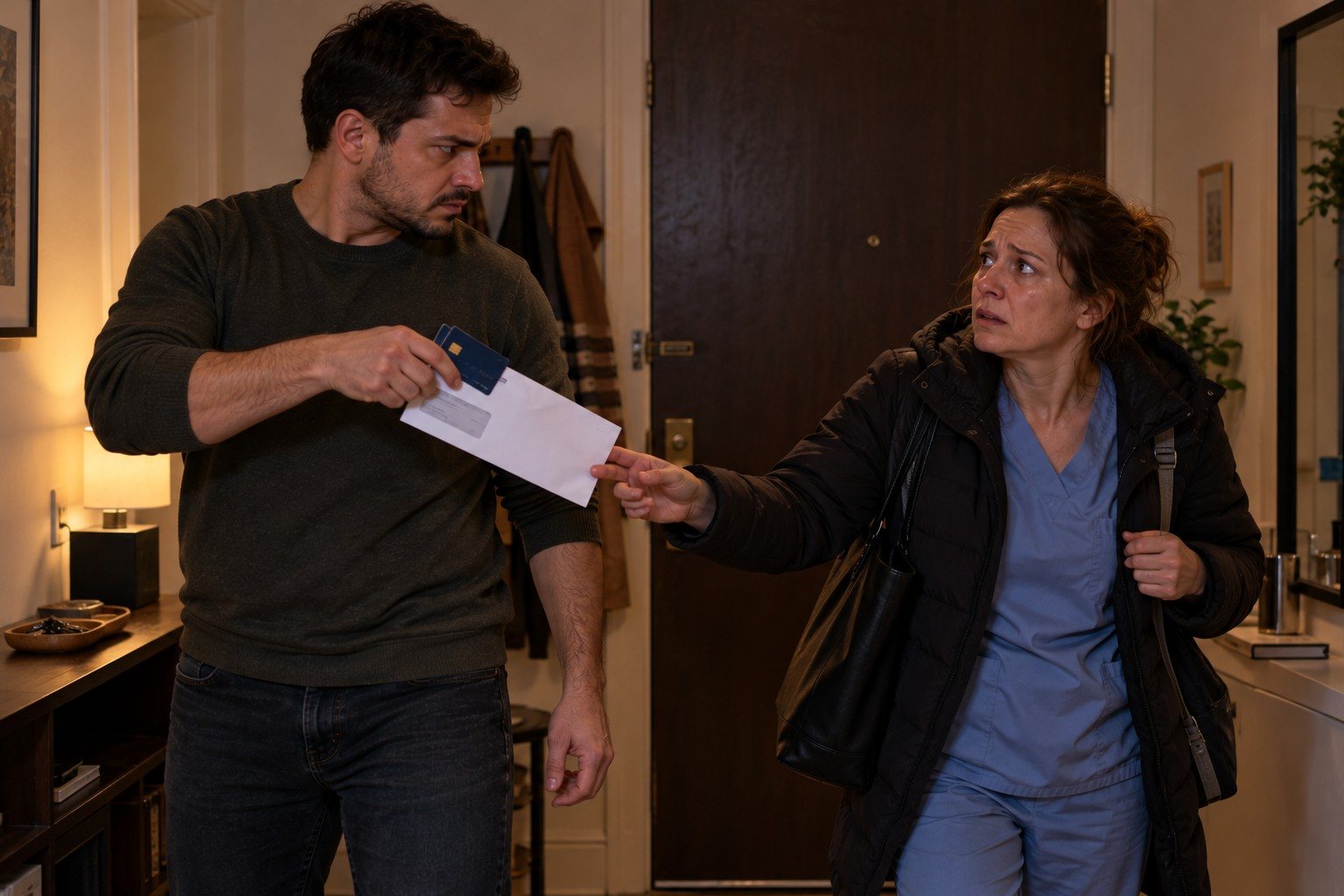
Some abusers hide an earlier marriage. When the truth comes out, they use it as one more threat: "we were never really married, so you have nothing." For a VAWA self-petition that is not the end of the question. The statute protects the person who married in good faith.
The authority is INA 204(a)(1)(A)(iii)(II)(aa)(BB) for a U.S. citizen abuser and INA 204(a)(1)(B)(ii)(II)(aa)(BB) for a permanent resident abuser, with the definition of intended spouse at INA 101(a)(50). The rules below are stated as of October 2026.
What makes you an intended spouse

Under 3 USCIS-PM D.2(B)(2), you show four things:
- You believed a legal marriage was created. You went through the marriage believing it was real and valid.
- A marriage ceremony was actually performed. A common law intended spouse qualifies only if there was a ceremony.
- The other requirements of a bona fide marriage were met.
- The marriage is invalid solely because of the abuser's preexisting marriage. The only defect is that the abuser was already married to someone else.
You must prove that any prior marriage of your own ended. You do not have to prove that the abuser's earlier marriage ended. If these are true, the law lets you self-petition as a spouse. The rest of the case is the spousal case under INA 204(a)(1)(A)(iii) or (B)(ii): good faith in entering the marriage, battery or extreme cruelty by the abuser, that you lived with the abuser during the relationship, and good moral character.
"Solely" matters. If the marriage was invalid for another reason as well, this provision may not reach it, and the facts have to be reviewed.

Building the record

USCIS must consider any credible evidence, and decides its weight (INA 204(a)(1)(J); 8 C.F.R. 204.2(c)(2)(i)). The record usually has three parts.
- The marriage you enteredYour marriage certificate, and records of the ceremony.Photographs, invitations, and statements from people who attended.
- What you believedYour declaration: what the abuser told you about their past, why you believed it, and when and how you learned otherwise.There is no substitute, but it can be written over several sessions. See writing your declaration.
- The earlier marriageAny record you already hold that shows the abuser was married to someone else at the time.Describe what you know and how you learned it. Your lawyer decides how to prove the rest. See evidence without documents.
Do not contact the other spouse
You do not need to reach the abuser, the person they were married to, or their family to file. Contact can put you at risk and can alert the abuser. Tell your lawyer what you know.
What protects you while it is pending

The government may not disclose information about your petition to anyone, with limited exceptions, and may not make an adverse determination of admissibility or deportability using information furnished only by the abuser or the abuser's family (8 U.S.C. 1367(a)(1), (a)(2)). The admissibility rule does not apply if you have been convicted of a crime listed in INA 237(a)(2), and USCIS does not apply it to the denial of an I-360, I-751 or I-765V (PA-2025-34). See confidentiality.
If you were arrested or charged at any point, including on the abuser's complaint, talk to your criminal lawyer before you write anything down, and see arrested or charged.
Once approved, the steps are the same as for any spouse of a citizen or permanent resident: eligibility for a work permit (INA 204(a)(1)(K)) and the path to the green card after VAWA. Your children can be included on your intended-spouse petition as derivatives, though the intended-spouse rule does not extend to a child's own self-petition (3 USCIS-PM D.2(B)(3)).
If this is not your situation
If you never went through a marriage at all, the self-petition as a spouse does not fit, but the U visa does not depend on marriage (INA 101(a)(15)(U)(iii)); see U visa. If you hold a conditional green card from the ceremony, the I-751 waiver has its own intended-spouse basis (INA 216(c)(4)(D)); see the I-751 waiver. If your marriage was valid and has since ended, see the 2-year rule.
Read next: who qualifies, good-faith marriage, writing your declaration, or the self-petition overview.
Common questions
What is an intended spouse?
A person who believed in good faith that they married the abuser, where the marriage was not legitimate solely because of the abuser's bigamy (INA 204(a)(1)(A)(iii)(II)(aa)(BB); INA 101(a)(50)). The law lets that person self-petition as if the marriage were valid.
I found out about the other marriage only after the abuse started. Does that matter?
The question is what you believed when you married. If you believed in good faith that the marriage was valid, finding out later is consistent with that. Your declaration should say when and how you learned the truth.
Do I have to prove the abuser's earlier marriage ended?
No. You must prove that your own prior marriages ended, but not the abuser's (3 USCIS-PM D.2(B)(2), as of October 2026). The record has to show that the abuser's existing marriage is the only reason yours is invalid; USCIS must consider any credible evidence (INA 204(a)(1)(J)). Do not contact the abuser, the other spouse or their family to get records; tell your lawyer what you know.
Does this apply if the abuser is a green card holder?
Yes. The parallel rule for the intended spouse of a permanent resident is INA 204(a)(1)(B)(ii)(II)(aa)(BB), and the same four showings apply (3 USCIS-PM D.2(B)(2), as of October 2026). The classification is F2A instead of immediate relative.
We had a common law marriage. Does that count?
Only if a ceremony was actually performed. A common law intended spouse qualifies only where there was a ceremony (3 USCIS-PM D.2(B)(2), as of October 2026).
The lawyers who will handle your case
One of them calls you back, privately, on your terms.
Talk to a lawyer privately. You decide how we reach you.
Tell us a safe number or email and a safe time, and whether we can leave a message. We never contact the person who hurt you, and we never call from a number or send anything that names this site. The first conversation is free and confidential, in English, Russian, Spanish or Uzbek, with a live interpreter for any other language.