
Divorced from the abuser: the 2-year rule
A divorce does not close the door. If your marriage to an abusive U.S. citizen or green card holder has ended, you can still self-petition within 2 years after it ended, as long as there is a connection between the end of the marriage and the abuse. The deadline is strict, so the date the marriage ended matters.
Current as of October 2026. We re-check this page every quarter and after any change in the law.
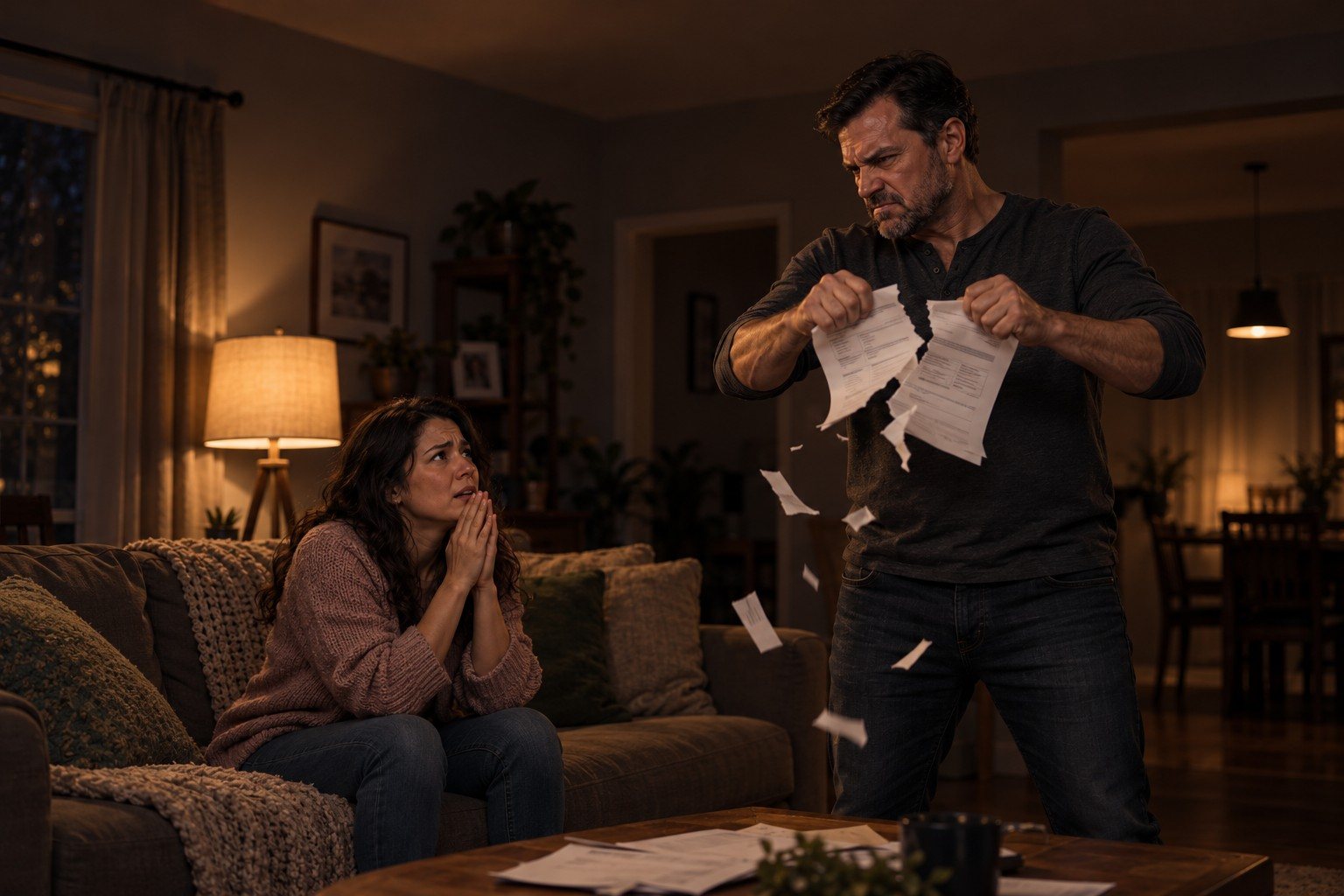
Abusers sometimes file for divorce first, or press for one, because they believe it ends the other spouse's immigration case. For a VAWA self-petition it does not, if you file in time. The rule is in INA 204(a)(1)(A)(iii)(II)(aa)(CC)(ccc) for former spouses of U.S. citizens and INA 204(a)(1)(B)(ii)(II)(aa)(CC)(bbb) for former spouses of permanent residents.
The rule in two parts

- Timing. You file within 2 years after the marriage legally ended by divorce or annulment.
- Connection. There is a connection between the end of the marriage and the battery or extreme cruelty. The divorce or annulment need not be on abuse grounds.
Authority: INA 204(a)(1)(A)(iii)(II)(aa)(CC)(ccc), (B)(ii)(II)(aa)(CC)(bbb); 3 USCIS-PM D.3(A)(1), as of October 2026.
Everything else is the same as for a current spouse. Under INA 204(a)(1)(A)(iii), (B)(ii) and USCIS Policy Manual Vol. 3, Part D you still show a marriage entered in good faith, battery or extreme cruelty during the marriage, that you lived with the abuser during the marriage, and good moral character. Your category follows the abuser's status: immediate relative for a citizen, F2A for a permanent resident.
Finding your date

The clock runs from the day the marriage legally ended, not the day you separated. For a divorce, look for the date on the final decree. If you do not have it, the court that granted the divorce keeps the record.
Separation, moving out, or a pending divorce case do not start the clock. While the marriage still exists you are a current spouse, and a divorce that becomes final after you file does not affect the petition (8 C.F.R. 204.2(c)(1)(ii)). That is a fact about the immigration case, not advice about the divorce. Talk to your family lawyer about timing; see divorce, custody and VAWA.
Deadline
The 2-year limit is written into the statute, and the Policy Manual says it has no waiver and no equitable tolling (3 USCIS-PM D.3(A)(1), as of October 2026). Count from the final date and plan to file with time to spare.
Showing the connection
The connection is a fact about your marriage, and USCIS must consider any credible evidence of it (INA 204(a)(1)(J); 8 C.F.R. 204.2(c)(2)(i)). Records that often help:
- Your declarationHow the abuse led to the end of the marriage, in order.This is the center of the showing in almost every case. See writing your declaration.
- The final decreeThe divorce or annulment judgment, which fixes the date the 2 years runs from.The court that granted it keeps the record; your lawyer can request a copy.
- The divorce filePleadings, affidavits or orders that mention the abuse.If the papers are silent, the timeline of abuse and separation can show the link on its own.
- Third-party affidavitsDetailed statements from people who saw how the abuse ended the marriage. The Policy Manual names the final decree plus detailed affidavits from you and third parties as the evidence (3 USCIS-PM D.3(A)(1)).Family, friends, an advocate, a counselor or clergy.
- Records from the same periodMessages, counseling or medical notes, police or court records.Statements from people who saw the marriage end. See evidence without documents.
If you were arrested or charged during the marriage, including on the abuser's complaint, talk to your criminal lawyer before you write anything down, and see arrested or charged.
After you file

Remarriage before approval is a basis for denial. Remarriage after approval is not a basis to revoke the petition (8 C.F.R. 204.2(c)(1)(ii); INA 204(h)). See divorce, remarriage and your case.
If the abuser died or lost their status rather than divorced you, separate rules apply. A U.S. citizen abuser's death opens a 2-year filing window; a permanent resident abuser's death before you file ends eligibility on that marriage, and a death after you file is handled under INA 204(l) (3 USCIS-PM D.3(D)). See abuser died or lost status. If the 2 years have passed, read other paths: the battered-spouse waiver of the joint I-751 filing can be filed after divorce (INA 216(c)(4)(C); 8 C.F.R. 216.5(e)(3)), and the U visa does not depend on marriage (INA 101(a)(15)(U)(iii)). In immigration court, see VAWA cancellation.
Read next: who qualifies, good-faith marriage, the I-751 waiver, or the self-petition overview.
Common questions
When does the 2-year period start?
The statute measures it from when the marriage legally ended by divorce or annulment (INA 204(a)(1)(A)(iii)(II)(aa)(CC)(ccc); 204(a)(1)(B)(ii)(II)(aa)(CC)(bbb)). Find the date on the final decree or the court's record. As of October 2026 the Policy Manual says the 2 years has no waiver and no equitable tolling (3 USCIS-PM D.3(A)(1)), so count from that date and file well before the last day.
Does the divorce have to be granted on abuse grounds?
No. The divorce or annulment need not be on abuse grounds (3 USCIS-PM D.3(A)(1), as of October 2026). What you show is a connection between the end of the marriage and the battery or extreme cruelty.
What does connection to the abuse mean?
The statute requires a connection between the legal end of the marriage and the battery or extreme cruelty. The record should show how the abuse is tied to the end of the marriage. USCIS must consider any credible evidence of that connection (INA 204(a)(1)(J)).
My divorce is not final yet. Does that change anything?
A divorce after the self-petition is filed does not affect the petition (8 C.F.R. 204.2(c)(1)(ii)). If you file while still married, you file as a current spouse. Whether and when to finalize a divorce is a family-law decision; talk to your family lawyer about the timing of both cases.
More than 2 years have passed. Is there anything else?
The self-petition is closed on this ground after 2 years, but other paths may fit. The battered-spouse waiver of the joint I-751 filing can be filed after divorce (8 C.F.R. 216.5(e)(3)), and the U visa does not depend on the marriage (INA 101(a)(15)(U)(iii)). If you are in immigration court, VAWA cancellation of removal is a separate remedy.
The lawyers who will handle your case
One of them calls you back, privately, on your terms.



Talk to a lawyer privately. You decide how we reach you.
Tell us a safe number or email and a safe time, and whether we can leave a message. We never contact the person who hurt you, and we never call from a number or send anything that names this site. The first conversation is free and confidential, in English, Russian, Spanish or Uzbek, with a live interpreter for any other language.