
The abuser died or lost their status
The abuser's death or loss of status does not automatically end your right to self-petition. If your abusive U.S. citizen spouse or adult son or daughter died, or the abuser lost or renounced citizenship, or lost permanent residence, in a way tied to an incident of domestic violence, you have 2 years to file. If the change comes after you file, other rules protect most petitions.
Current as of October 2026. We re-check this page every quarter and after any change in the law.
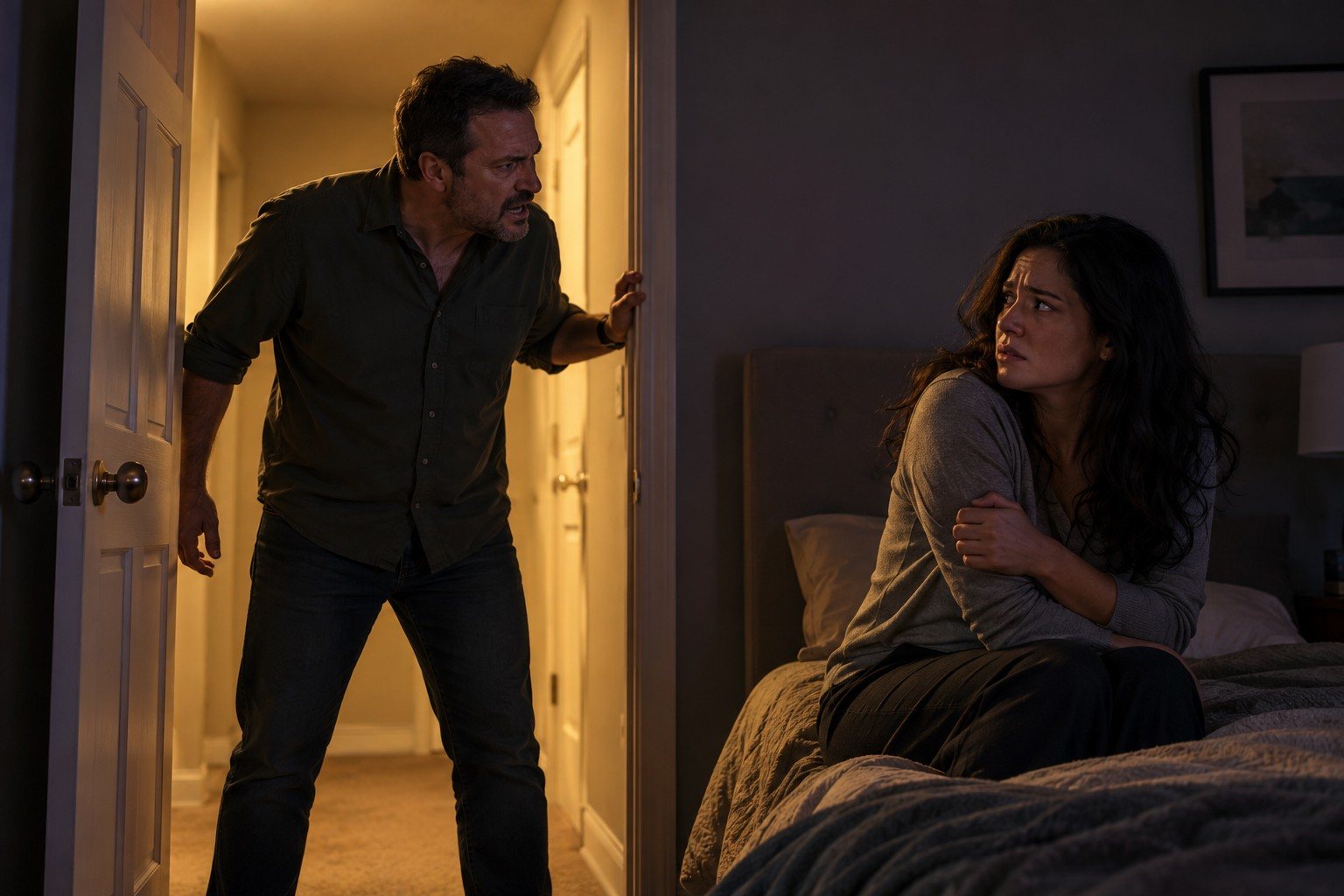
Abusers often say that if they die, are deported or give up their green card, your case dies with them. For a self-petition the statute covers most of those moments. The answer turns on three things: whether the abuser was a citizen or a permanent resident, whether the change came before or after you filed, and whether you are the spouse, the child or the parent.
Changes before you file

| What happened | The rule | Authority |
|---|---|---|
| Your U.S. citizen spouse died | File within 2 years after the death. No waiver and no tolling | INA 204(a)(1)(A)(iii)(II)(aa)(CC)(aaa); 3 USCIS-PM D.3(D)(1) |
| Your U.S. citizen son or daughter died | A parent may file within 2 years after the death, if the son or daughter was at least 21 at death | INA 204(a)(1)(A)(vii)(I); 3 USCIS-PM D.3(D)(1) |
| Your U.S. citizen parent died | A child may not self-petition on that relationship; the death rule covers spouses and parents only | 3 USCIS-PM D.3(B)(1), D.3(D)(1) |
| Your permanent resident spouse or parent died | You are not eligible to self-petition on that relationship | 3 USCIS-PM D.3(D)(2) |
| The citizen abuser lost or renounced citizenship | File within 2 years, and the loss must be related to an incident of domestic violence. No tolling | INA 204(a)(1)(A)(iii)(II)(aa)(CC)(bbb); 3 USCIS-PM D.3(E)(1) |
| The permanent resident abuser lost that status | File within 2 years, and the loss must be due to an incident of domestic violence. No tolling | INA 204(a)(1)(B)(ii)(II)(aa)(CC)(aaa); 3 USCIS-PM D.3(E)(1) |
These rules are stated as of October 2026.
For a parent whose citizen son or daughter lost or renounced citizenship, the son or daughter must have been 21 or older at the time of the loss (3 USCIS-PM D.3(E)(1)). Once a spouse or child has filed, a citizen spouse or parent who loses citizenship on account of the abuse does not take away the immediate-relative classification (INA 201(b)(2)(A)(i)).
In each case you still show the rest of the case under INA 204(a)(1)(A)(iii) or (B)(ii) and USCIS Policy Manual Vol. 3, Part D: a marriage entered in good faith, battery or extreme cruelty during the marriage, that you lived with the abuser during the marriage, and good moral character. Children and parents show their own elements; see abused child and abused parent.
If your abuser was a green card holder and died before you filed, other doors may still be open, such as the U visa or VAWA cancellation in immigration court. Ask us.
"Related to an incident of domestic violence"

For a loss of status, the statute asks for a link between the loss and an incident of domestic violence. The clearest record shows the incident, the proceeding that followed, and the dates. USCIS must consider any credible evidence (INA 204(a)(1)(J); 8 C.F.R. 204.2(c)(2)(i)).
- The incidentPolice or court records, a protective order, medical records.Your declaration and statements from people who knew what happened. See evidence without documents.
- The loss of status and its dateAny record you already have, or that your lawyer can lawfully obtain.Describe what you know and how you know it. Do not contact the abuser or their family to get it.
Do not go looking through the abuser's case
You do not have to find out on your own whether or why the abuser lost status. Tell your lawyer what you know. Reaching out to the abuser, their lawyer or their family can put you at risk and is not needed to file.
If the change comes after you file
- A U.S. citizen abuser dies after you file. The death while the petition is pending, or after approval, does not affect it, and you can still apply for the green card or an immigrant visa (INA 204(a)(1)(A)(vi); 3 USCIS-PM D.3(D)(1)).
- A permanent resident abuser dies after you file. USCIS may approve the pending petition, or keep an approved one in effect, in its discretion under INA 204(l). You must have lived in the United States when the permanent resident died and still live here when the petition is approved; one derivative who meets that residence test is enough. USCIS can refuse if approval is not in the public interest (3 USCIS-PM D.3(D)(2)).
- The abuser loses status after you file. A spouse's or child's petition is not affected, and no connection to domestic violence is needed at that point (INA 204(a)(1)(A)(vi), (B)(v)(I); 3 USCIS-PM D.3(E)(2)).
- A self-petitioning parent is the exception. If the citizen son or daughter loses or renounces citizenship after the parent files, the parent is no longer eligible (3 USCIS-PM D.3(E)(2)).
- A permanent resident abuser naturalizes after you file. The petition converts to the immediate relative classification (INA 204(a)(1)(B)(v)(II)).
- A divorce after you file does not affect the petition (INA 204(a)(1)(A)(vi), (B)(v)(I); 8 C.F.R. 204.2(c)(1)(ii)).
These rules are stated as of October 2026.
The government may not make an adverse determination of admissibility or deportability using information furnished only by the abuser or the abuser's family, unless you have been convicted of a crime listed in INA 237(a)(2) (8 U.S.C. 1367(a)(1)). USCIS does not apply that rule to the denial of an I-360 itself (PA-2025-34). See confidentiality.
When the 2 years have passed

The self-petition on these grounds closes after 2 years. Other paths may fit. The U visa covers domestic violence where the abuser need not be a citizen or permanent resident (INA 101(a)(15)(U)(iii)); see U visa. If you hold a conditional green card, see the I-751 waiver. If you are in immigration court, start at VAWA in immigration court.
If the marriage ended in divorce rather than death or loss of status, see the 2-year rule for former spouses.
Read next: who qualifies, spouse of a green card holder, other paths, or the self-petition overview.
Common questions
My abusive U.S. citizen spouse died. How long do I have?
You may self-petition within 2 years after the death (INA 204(a)(1)(A)(iii)(II)(aa)(CC)(aaa)). The 2 years has no waiver and no tolling (USCIS Policy Manual Vol. 3, Part D, ch. 3, as of October 2026). Count from the date of death and file well before the end of the period.
My abusive green card holder spouse died. Can I still file?
If the permanent resident died before you filed, you are not eligible to self-petition on that relationship. If the permanent resident died while your petition was pending or after it was approved, USCIS may approve it or keep it in effect in its discretion under INA 204(l), if you lived in the United States when the death happened and still live here (3 USCIS-PM D.3(D)(2), as of October 2026).
The abuser was deported. Can I still file?
Possibly. You may file if, within the 2 years before filing, a citizen abuser lost or renounced citizenship related to an incident of domestic violence (INA 204(a)(1)(A)(iii)(II)(aa)(CC)(bbb)), or a permanent resident abuser lost that status due to an incident of domestic violence (INA 204(a)(1)(B)(ii)(II)(aa)(CC)(aaa)). Whether a particular loss of status meets that test turns on the record.
I already filed, and now my green card holder spouse lost their status. What happens to my petition?
A spouse's or child's petition is not affected by the abuser's loss of status after filing, and no connection to domestic violence is needed at that stage (INA 204(a)(1)(B)(v)(I); 3 USCIS-PM D.3(E), as of October 2026). The rule is different for a self-petitioning parent.
Do I need any record from the abuser's immigration file?
You need evidence of the death or the loss of status and its timing. USCIS must consider any credible evidence (INA 204(a)(1)(J)). Never try to obtain records by contacting the abuser or their family; tell your lawyer what you know and let the lawyer decide how to prove it.
The lawyers who will handle your case
One of them calls you back, privately, on your terms.


Talk to a lawyer privately. You decide how we reach you.
Tell us a safe number or email and a safe time, and whether we can leave a message. We never contact the person who hurt you, and we never call from a number or send anything that names this site. The first conversation is free and confidential, in English, Russian, Spanish or Uzbek, with a live interpreter for any other language.