
VAWA after divorce or death: the two-year windows, loss of status and remarriage
A VAWA self-petition does not end when the marriage does. A former spouse, a widow or widower, and the spouse of an abuser who lost status each have a two-year window to file. After filing, divorce does not affect the petition, but remarriage before approval does. Here is how each change works.
Current as of October 2026. We re-check this page every quarter and after any change in the law.
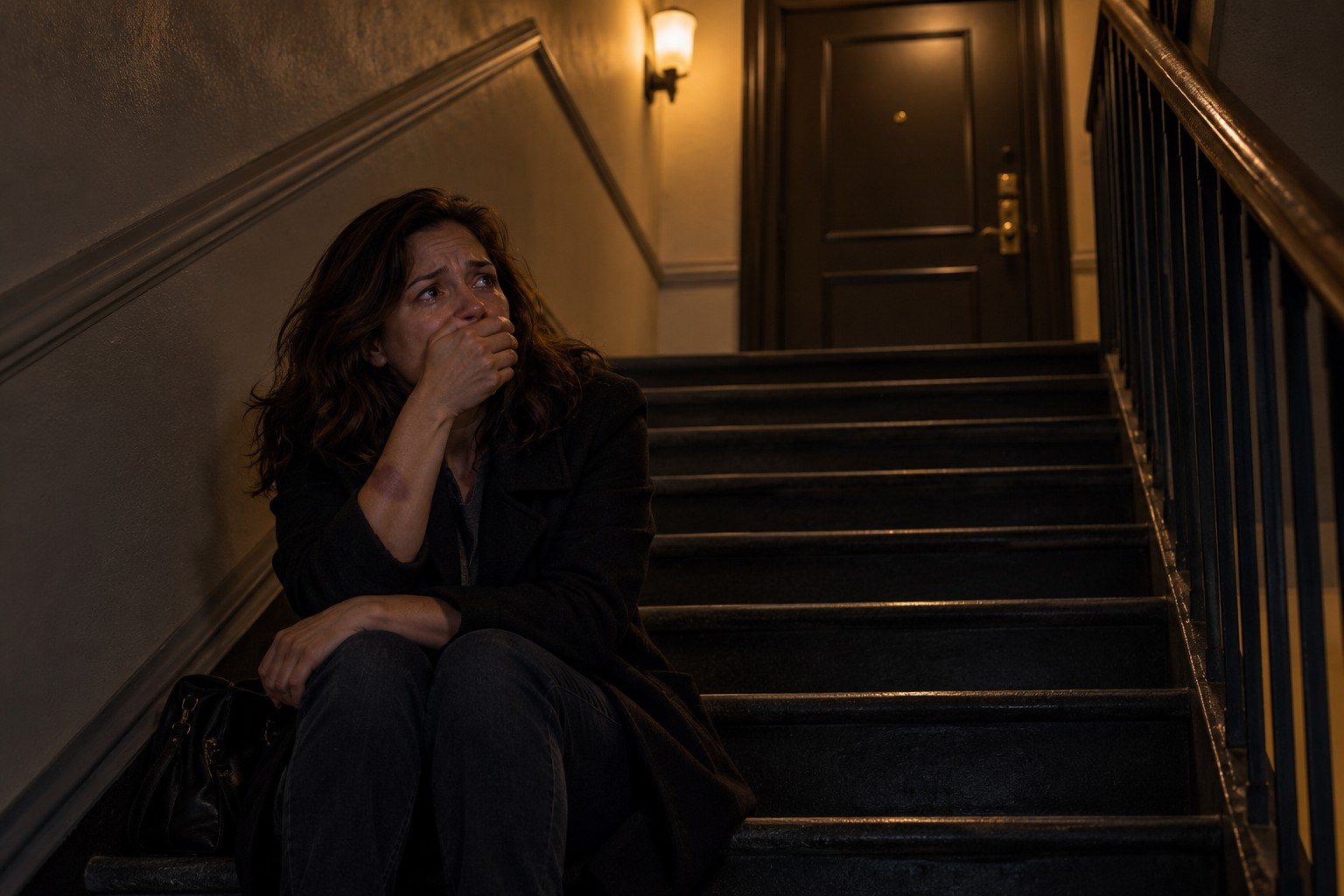
Abusers often tell their spouses that a divorce ends any chance at a green card. For a VAWA self-petition, that is not the rule. Congress wrote specific windows into the statute for people whose marriages ended, whose abuser died, or whose abuser lost status. It also wrote rules for what happens when those events come after you file.
The timing is what matters. A change before filing usually starts a 2-year clock. A change after filing is often harmless, with one important exception: remarriage. This article walks through each situation.
The two-year windows at a glance

| What happened before filing | The window | The extra condition | Authority |
|---|---|---|---|
| The marriage ended (divorce) | File within 2 years after the marriage ended | A connection between the end of the marriage and the battery or extreme cruelty | INA 204(a)(1)(A)(iii)(II)(aa)(CC)(ccc); 204(a)(1)(B)(ii)(II)(aa)(CC)(bbb) |
| The U.S. citizen abuser died | File within 2 years after the death | None beyond the usual elements | INA 204(a)(1)(A)(iii)(II)(aa)(CC)(aaa) |
| The abuser lost or renounced citizenship or permanent residence | File within 2 years after the loss | The loss is related to an incident of domestic violence | INA 204(a)(1)(A)(iii)(II)(aa)(CC)(bbb); 204(a)(1)(B)(ii)(II)(aa)(CC)(aaa) |
In every row, you still prove the other elements: a marriage entered in good faith, battery or extreme cruelty during the marriage, shared residence during the marriage, and good moral character (INA 204(a)(1)(A)(iii), (B)(ii); 3 USCIS-PM D.2). See the former spouse two-year rule and abuser died or lost status.
None of these windows can be extended. The USCIS Policy Manual says there is no waiver and no equitable tolling of the 2 years for a former spouse, for the death of a citizen abuser, or for the abuser's loss of status (3 USCIS-PM D.3(A)(1), D.3(D)(1), D.3(E)(1)).
The rule is different when the abuser was a green card holder who died. If the green card holder died before you filed, you are not eligible to self-petition. If they died while your petition was pending or after approval, USCIS may approve or continue it in its discretion if you lived in the United States when they died and still live here, unless approval is not in the public interest (INA 204(l); 3 USCIS-PM D.3(D)(2)). A child whose abusive citizen parent died before the child filed is not eligible either; the 2-year death rule covers spouses and parents (3 USCIS-PM D.3(B)(1), D.3(D)(1)).
After divorce: the connection to the abuse

The former-spouse window is not open to every divorced person. You must file within 2 years after the marriage legally ended, by divorce or annulment, and show a connection between the end of the marriage and the battery or extreme cruelty (INA 204(a)(1)(A)(iii)(II)(aa)(CC)(ccc), (B)(ii)(II)(aa)(CC)(bbb); 3 USCIS-PM D.3(A)(1)). The divorce or annulment does not have to have been granted on abuse grounds (3 USCIS-PM D.3(A)(1)).
That connection is usually shown through your declaration and the timeline: when the abuse escalated, when and why you separated, who filed for divorce, and what the divorce papers say. The Policy Manual points to the final decree plus detailed affidavits from you and from other people (3 USCIS-PM D.3(A)(1)). A divorce filed by the abuser can still be connected to the abuse, and the declaration can explain grounds printed on a judgment that do not tell the whole story. See how to prepare a VAWA declaration.
The deadline is 2 years from the day the marriage legally ended
Do not plan to file near the end of the window. Gathering records and preparing a declaration take time, and a petition filed one day late does not fit this door.
Separated but not divorced
You do not have to divorce to self-petition, and you do not have to be living with the abuser when you file. What the statute asks is that you lived together during the marriage, at some point before filing, with no minimum period (INA 204(a)(1)(A)(iii)(II)(dd), (B)(ii)(II)(dd); 3 USCIS-PM D.2(F)). Since PA-2025-33, USCIS reads that to mean residence during the marriage itself; a visit while living elsewhere does not count. If you are separated now, you may file as a current spouse, and no 2-year clock is running yet. Whether to divorce, and when, is a family-law decision with immigration consequences; plan the two together.
If you are in a divorce or custody case now, that case and your immigration case affect each other. What you say in family court can be read later, and the federal confidentiality rule in 8 U.S.C. 1367 does not bind a state family court; that is our reading of its scope.
After the abuser's death
The spouse of an abusive U.S. citizen who died may self-petition within 2 years after the death (INA 204(a)(1)(A)(iii)(II)(aa)(CC)(aaa)). Grief after abuse is complicated, and many survivors do not think of immigration at all in the months after a death. The window keeps running anyway.
If a citizen abuser dies while your petition is pending or after it is approved, the petition is not affected, and you can still adjust status (INA 204(a)(1)(A)(vi); 3 USCIS-PM D.3(D)(1)). A parent abused by a citizen son or daughter who died may file within 2 years, if the son or daughter was at least 21 at death (3 USCIS-PM D.3(D)(1)).
For children and parents whose qualifying relationship is a step-relationship that ended through a death, USCIS's revised guidance requires proof that the relationship with the surviving abuser continues (PA-2025-33). See abused child and abused parent.
After the abuser loses status

If the abuser lost or renounced citizenship or permanent residence, you may file within 2 years, if the loss was related to an incident of domestic violence (INA 204(a)(1)(A)(iii)(II)(aa)(CC)(bbb); 204(a)(1)(B)(ii)(II)(aa)(CC)(aaa)).
If the abuser loses status after you file, the rules are kinder:
- If the abuser loses status after you file, a spouse's or child's petition is not affected, and no connection to domestic violence is needed (INA 204(a)(1)(A)(vi), (B)(v)(I); 3 USCIS-PM D.3(E)(2)). A parent is different: if the citizen son or daughter loses or renounces citizenship after the parent files, the parent is no longer eligible (3 USCIS-PM D.3(E)(2)).
- If a citizen abuser loses citizenship on account of the abuse, a self-petitioner under INA 204(a)(1)(A)(iii) or (iv) remains an immediate relative (INA 201(b)(2)(A)(i)).
- If a green card holder abuser naturalizes after you file, the petition converts to the immediate-relative category (INA 204(a)(1)(B)(v)(II)). That can remove the Visa Bulletin wait.
After you file: divorce is safe, remarriage is not

Once the I-360 is filed, a divorce does not affect it (INA 204(a)(1)(A)(vi), (B)(v)(I)). You do not have to stay married to keep the petition alive.
Remarriage is different. Remarrying before approval is a basis for denial (8 C.F.R. 204.2(c)(1)(ii)). Remarrying after approval is not a basis to revoke the approval (INA 204(h)). If you have met someone and are thinking about marriage, talk to your lawyer about timing before the wedding, not after.
| After you file | Effect on the petition | Authority |
|---|---|---|
| You divorce the abuser | No effect | INA 204(a)(1)(A)(vi), (B)(v)(I) |
| You remarry before approval | Basis for denial | 8 C.F.R. 204.2(c)(1)(ii) |
| You remarry after approval | Not a basis to revoke | INA 204(h) |
| A green card holder abuser naturalizes | Converts to immediate relative | INA 204(a)(1)(B)(v)(II) |
| The abuser loses status (spouse or child petition) | No effect | INA 204(a)(1)(A)(vi), (B)(v)(I) |
| A citizen abuser dies | No effect | INA 204(a)(1)(A)(vi); 3 USCIS-PM D.3(D)(1) |
Papers to gather when the marriage has ended
The record for a former spouse, widow or widower looks much like any other self-petition, with a few additions. USCIS must consider any credible evidence (INA 204(a)(1)(J); 8 C.F.R. 204.2(c)(2)(i)), so nothing below is the only way to prove a point.
- The marriageSince PA-2025-33, primary evidence first: the marriage certificate and proof that all prior marriages ended.Certified copies can usually be ordered from the issuing office.
- How it endedThe divorce judgment, or the death certificate, with the date that starts the 2-year window.Court dockets or the clerk's records can show the date.
- The connection to the abuseFor a former spouse: your declaration, the divorce pleadings if they help, protective-order records if any exist.Statements from people who saw why you separated.
- The abuser's statusAnything showing the abuser was a U.S. citizen or green card holder.Tell us what you know; an earlier I-130 receipt can help, and its priority date can carry over (8 C.F.R. 204.2(h)(2)).
Our evidence checklist has the full list.
Your children, as time passes

Children grow up while cases wait. Two rules protect them.
- A child listed on your petition who turns 21 before approval is treated as a self-petitioner with your priority date, as long as the child stays unmarried (INA 204(a)(1)(D)(i)(III), (D)(ii)).
- A child abused by a citizen or green card holder parent who turns 21 may still file their own petition until age 25, if the abuse was at least one central reason for the delay (INA 204(a)(1)(D)(v)).
See children on your petition.
When your own status has lapsed
Many survivors lose their own status during the marriage, because the abuser never filed or let a visa expire. With an approved self-petition, several barriers fall away. None of the INA 245(c) bars, including unlawful status and unauthorized employment, applies (INA 245(c)). You may adjust even if you were not inspected and admitted or paroled (INA 245(a)), and the entry-without-inspection ground does not apply if there is a substantial connection between the abuse and the unlawful entry (INA 212(a)(6)(A)(ii)). The 3- and 10-year unlawful-presence bars do not apply where there is a substantial connection between the abuse and the violation of the terms of your visa (INA 212(a)(9)(B)(iii)(IV)). See the VAWA green card, step by step.
A conditional green card and a divorce
If you hold a two-year conditional card through the abuser, the battered-spouse waiver lets you file the I-751 alone, whether you are still married, separated or divorced, as long as it is filed before a final order of removal (INA 216(c)(4)(C); 6 USCIS-PM I.5; 8 C.F.R. 216.5). See the I-751 waiver.
Citizenship later
A person who became a permanent resident as the battered spouse or child of a U.S. citizen may naturalize after 3 years, without the requirement of living in marital union with the citizen (INA 319(a)). See citizenship after VAWA.
Separation and safety
A safety plan is made with a domestic violence advocate. The National Domestic Violence Hotline is 1-800-799-7233, or text START to 88788. If you are in danger now, call 911.
Read next: the former spouse two-year rule, abuser died or lost status, divorce, remarriage and your case, or divorce, custody and VAWA.
Common questions
We divorced last year. Is it too late to file?
Not if you file within 2 years after the marriage ended and can show a connection between the end of the marriage and the battery or extreme cruelty (INA 204(a)(1)(A)(iii)(II)(aa)(CC)(ccc) for spouses of citizens; INA 204(a)(1)(B)(ii)(II)(aa)(CC)(bbb) for spouses of green card holders). Count from the date the marriage legally ended. The 2 years has no waiver or tolling (3 USCIS-PM D.3(A)(1)), so do not wait until the end.
My abusive U.S. citizen spouse died. Can I still self-petition?
Yes, if you file within 2 years after the death (INA 204(a)(1)(A)(iii)(II)(aa)(CC)(aaa)). You still show the other elements: a good-faith marriage, the abuse during the marriage, shared residence during the marriage, and good moral character.
If I divorce after filing, does my petition fail?
No. A divorce after you file does not affect the petition (INA 204(a)(1)(A)(vi), (B)(v)(I)).
Can I remarry while my VAWA petition is pending?
Remarrying before approval is a basis for denial (8 C.F.R. 204.2(c)(1)(ii)). Remarrying after approval is not a basis to revoke it (INA 204(h)). If you are thinking about remarrying, talk to your lawyer about timing first.
The abuser was deported. What happens to my case?
If a green card holder abuser loses status after you file, the petition is not affected (INA 204(a)(1)(B)(v)(I)). If the loss of status came first, you may still file within 2 years of it, if the loss was related to an incident of domestic violence (INA 204(a)(1)(A)(iii)(II)(aa)(CC)(bbb); 204(a)(1)(B)(ii)(II)(aa)(CC)(aaa)).
The lawyers who will handle your case
One of them calls you back, privately, on your terms.



Talk to a lawyer privately. You decide how we reach you.
Tell us a safe number or email and a safe time, and whether we can leave a message. We never contact the person who hurt you, and we never call from a number or send anything that names this site. The first conversation is free and confidential, in English, Russian, Spanish or Uzbek, with a live interpreter for any other language.