
The U visa for domestic violence survivors: elements, certification and the green card
Domestic violence is a qualifying crime for the U visa, and the abuser does not have to be a citizen, a green card holder or your spouse. The price is a signed certification from law enforcement and a longer road to a green card. Here is how the U visa works and when it fits better than VAWA.
Current as of October 2026. We re-check this page every quarter and after any change in the law.
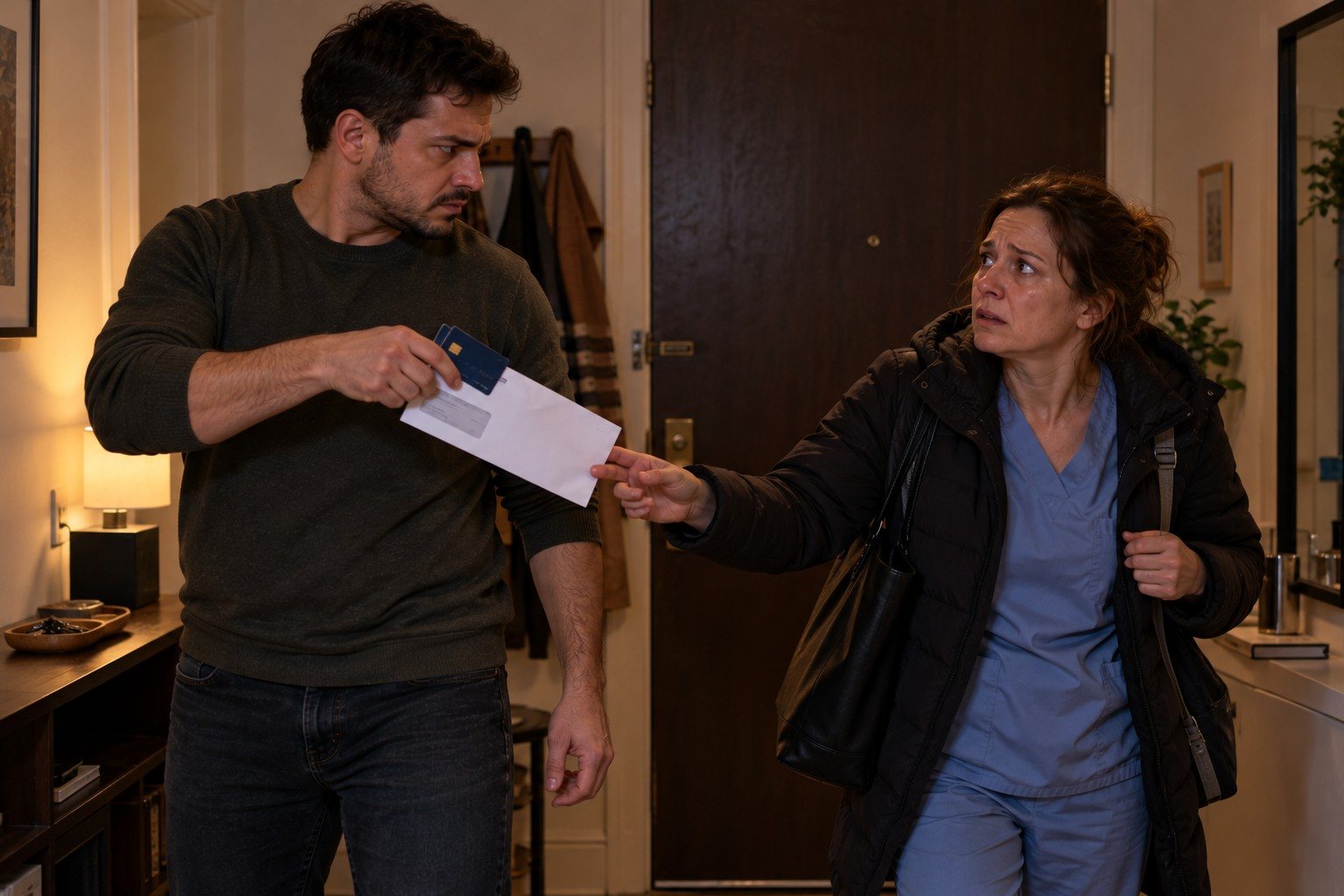
VAWA only works when the abuser is a U.S. citizen or green card holder and the right relative: a spouse, a parent, or an adult citizen son or daughter. Many survivors are abused by someone outside that list: a boyfriend or girlfriend, a partner with no status, a spouse on a temporary visa. For them, the U visa is often the door that fits.
The U visa is a nonimmigrant status for people harmed by certain crimes who help law enforcement (INA 101(a)(15)(U); INA 214(p); 8 C.F.R. 214.14). Domestic violence is one of the qualifying crimes, the abuser need not be a citizen or green card holder, and the two of you need not be married (INA 101(a)(15)(U)(iii)). USCIS has exclusive jurisdiction over the petition, filed on Form I-918 (8 C.F.R. 214.14).
The four elements

The statute and the regulation set out four things the petitioner must show (INA 101(a)(15)(U)(i)(I)-(IV); 8 C.F.R. 214.14(b)(1)-(4)):
- Substantial physical or mental abuse as a result of the qualifying criminal activity. USCIS looks at the nature, severity and duration of the harm and any lasting effects. A series of acts can add up to substantial abuse even if no single act would (8 C.F.R. 214.14(b)(1)).
- Information about the crime. You possess information about the criminal activity. For a child under 16 or a person who is incapacitated, a parent, guardian or next friend may hold that information (INA 101(a)(15)(U)(i)(II); 8 C.F.R. 214.14(b)(2)).
- Helpfulness. You have been, are being, or are likely to be helpful to law enforcement, a prosecutor, a judge or another authority investigating or prosecuting the crime, and you have not refused reasonable requests for help since your cooperation began (INA 101(a)(15)(U)(i)(III); 8 C.F.R. 214.14(b)(3)).
- A U.S. connection. The crime violated U.S. law or happened in the United States, including Indian country and military installations (INA 101(a)(15)(U)(i)(IV); 8 C.F.R. 214.14(b)(4)).
Notice what is not on the list. The abuser's immigration status does not matter. Marriage does not matter. Shared residence is not an element. That is why the U visa can reach a dating partner, a co-parent you never married, or an abuser who is undocumented (INA 101(a)(15)(U)(iii)).
Notice also what the third element asks. Helpfulness can be past, present or likely in the future, but someone in authority has to certify it in writing (8 C.F.R. 214.14(c)(2)(i)). Whether to report, and when, is your decision; what reporting does to the immigration case is something to talk through with a lawyer, and a safety plan is made with an advocate.
The certification: Form I-918 Supplement B

The U visa cannot be filed without it. Form I-918 Supplement B is the certification (INA 214(p); 8 C.F.R. 214.14(c)(2)(i)). Three rules govern it:
- Who signs. A certifying official: the head of a certifying agency, a supervisor the head has specifically designated, or a federal, state or local judge (8 C.F.R. 214.14(a)(3)).
- Which agencies. Law enforcement, prosecutors, judges and other authorities responsible for investigating or prosecuting the crime. The regulation names child protective services, the EEOC and the Department of Labor among them (8 C.F.R. 214.14(a)(2)).
- When. It must be signed within the 6 months before the I-918 is filed (8 C.F.R. 214.14(c)(2)(i)).
The certification expires for filing purposes after 6 months
A signed Supplement B has to go in with the petition inside that window (8 C.F.R. 214.14(c)(2)(i)). Plan the rest of the packet so the certification is not stale by the time it is ready.
A family court judge who issued a protective order, or the prosecutor's office in a criminal case against the abuser, may be among the officials who can certify, because judges and prosecutors are certifying officials under 8 C.F.R. 214.14(a)(2)-(3). Whether a particular office will sign is up to that office. See the U visa certification.
The rest of the packet

Besides the I-918 and Supplement B, the regulation calls for (8 C.F.R. 214.14(c)(1)(i)-(ii), (c)(2)(ii)-(iv), (c)(3)):
- your signed statement describing what happened;
- any additional evidence of the elements;
- Form I-192 if you are inadmissible on any ground (8 C.F.R. 212.17); and
- biometrics.
We do not publish the U visa form fees on this site. Check the form page at uscis.gov/i-918 before you file.
If you are in immigration court
A person in removal proceedings files the U petition with USCIS, not with the court. ICE may agree to a joint motion to terminate the case without prejudice (8 C.F.R. 214.14(c)(1)(i)). An immigration judge should generally continue proceedings for a prima facie approvable U petition (Matter of Sanchez Sosa, 25 I&N Dec. 807 (BIA 2012)). A person with a final order may still file, but filing does not stop removal; a stay may be requested under 8 C.F.R. 241.6 (8 C.F.R. 214.14(c)(1)(ii)). See VAWA in immigration court.
Family members

Who can come with you depends on your age when you file (INA 101(a)(15)(U)(ii); 8 C.F.R. 214.14(a)(10), (f)):
| Your age | Family who may be included |
|---|---|
| 21 or older | Your spouse and your children |
| Under 21 | Your spouse, your children, your parents and your unmarried siblings under 18 |
That list is wider than VAWA's in one way. A VAWA self-petitioning spouse or child may include only their own children as derivatives, and a self-petitioning parent may include no one (3 USCIS-PM D.2(I)). A U petitioner under 21 can bring parents and young siblings.
The cap and the waiting list, as the regulation states it

Congress capped the U visa at 10,000 principal grants a year (INA 214(p)). The cap is the reason eligible petitions can wait.
The regulation sets out what happens then. Under 8 C.F.R. 214.14(d)(2):
- An eligible petitioner who is not granted U status solely because the cap has been reached is placed on a waiting list.
- The list is in order of filing date, and USCIS gives written notice of placement.
- While on the list, USCIS grants deferred action or parole to the petitioner and qualifying family members, and may authorize employment.
What we do not publish
That is the text of the regulation. We have not verified how USCIS currently applies it, including any bona fide determination process, so we do not describe current practice or wait times here. See uscis.gov/processing-times and talk to us about your case.
Confidentiality

U petitions get the same federal confidentiality protection as VAWA petitions. DHS, DOJ and State may not use or disclose information about a person with a U application except in the ways 8 U.S.C. 1367(b) allows (8 U.S.C. 1367(a)(2)). They also may not make an adverse admissibility or deportability decision using information furnished solely by the perpetrator, unless the person has a conviction listed in INA 237(a)(2) (8 U.S.C. 1367(a)(1); PA-2025-34). That rule does not stop anyone from calling ICE, and it does not bind state courts; that is our reading of its scope. See confidentiality.
From U visa to green card: INA 245(m)

A U nonimmigrant may apply to adjust status after 3 years of continuous physical presence since admission in U status (INA 245(m); 8 C.F.R. 245.24). The statute also asks (INA 245(m)(1)-(3)):
- that continued presence is justified on humanitarian grounds, to ensure family unity, or is otherwise in the public interest;
- that the person is not described in INA 212(a)(3)(E); and
- that the person has not unreasonably refused to assist in the investigation or prosecution, based on affirmative evidence.
A single absence of more than 90 days, or absences of more than 180 days in total, break continuous presence, unless the absence was to assist the investigation or prosecution or an official certifies it was otherwise justified (INA 245(m)). Family members who never received U status may also be adjusted in some cases, to avoid extreme hardship (INA 245(m)). See U visa to green card.
When the U visa beats VAWA, and when it does not
Neither is better in the abstract. The question is which one your facts fit, and what each costs you in time and exposure.
| Question | U visa | VAWA self-petition |
|---|---|---|
| Who the abuser must be | Anyone who committed the qualifying crime (INA 101(a)(15)(U)(iii)) | A citizen or green card holder spouse or parent, or an adult citizen son or daughter (INA 204(a)(1)) |
| Marriage or shared home | Not required | Qualifying relationship and residence with the abuser (INA 204(a)(1)(A)(iii), (iv), (vii)) |
| Police or court involvement | Signed Supplement B required (8 C.F.R. 214.14(c)(2)(i)) | Not required; any credible evidence (INA 204(a)(1)(J)) |
| Annual cap | 10,000 principals (INA 214(p)) | None for immediate relatives (INA 201(b)(2)(A)(i)) |
| Path to a green card | After 3 years in U status (INA 245(m)) | Citizen abuser: I-485 may be filed with the I-360 (3 USCIS-PM D.4(A)) |
| Government filing fee for the main petition, as of October 2026 | Not published here; see uscis.gov/i-918 | None for the VAWA I-360 (8 C.F.R. 106.2(a)(17)(ii)) |
The U visa tends to fit when:
- the abuser has no status, or a temporary visa (INA 101(a)(15)(U)(iii));
- you were never married to the abuser and never had a qualifying parent or child relationship with them;
- a VAWA window has closed, for example a former spouse more than 2 years after the divorce (INA 204(a)(1)(A)(iii)(II)(aa)(CC)(ccc); 3 USCIS-PM D.3(A)(1)), or a child whose abusive citizen parent died before the child filed (3 USCIS-PM D.3(B)(1)); or
- a parent was abused by a son or daughter who is a green card holder, not a citizen (3 USCIS-PM D.2(B)(4)).
VAWA tends to fit better when the abuser is a citizen or green card holder in a qualifying relationship, because it needs no certification, has no cap for immediate relatives, and a citizen's spouse, child or parent can apply for the green card at the same time as the petition (3 USCIS-PM D.4(A)). VAWA self-petitioners are also exempt from the public charge ground (INA 212(a)(4)(E)(i)). Some people fit both. Which to file is a strategy decision for your lawyer and you. See VAWA, U visa or I-751 waiver.
Reporting and safety
A safety plan is made with a domestic violence advocate. The National Domestic Violence Hotline is 1-800-799-7233, or text START to 88788. If you are in danger now, call 911.
If you were arrested on the abuser's complaint, see arrested or charged and talk to your criminal lawyer before writing anything down.
Read next: the U visa, the U visa certification, U visa to green card, or other doors.
Common questions
My abuser is undocumented. Can I still get a U visa?
Possibly. Domestic violence is a qualifying criminal activity for the U visa, and the abuser need not be a U.S. citizen or green card holder, and the two of you need not be married (INA 101(a)(15)(U)(iii)). You still need the other elements, including a signed law enforcement certification.
Do I have to have called the police?
You must have been, be, or be likely to be helpful to law enforcement, a prosecutor, a judge or another authority in the investigation or prosecution, and not have refused reasonable requests since you began helping (INA 101(a)(15)(U)(i)(III); 8 C.F.R. 214.14(b)(3)). A certifying official must sign Form I-918 Supplement B within the 6 months before you file (8 C.F.R. 214.14(c)(2)(i)).
Can my children be included?
Yes. If you are 21 or older, your spouse and children may be included. If you are under 21, your spouse, children, parents and unmarried siblings under 18 may be included (INA 101(a)(15)(U)(ii); 8 C.F.R. 214.14(a)(10), (f)).
How soon can a U visa holder get a green card?
After 3 years of continuous physical presence since admission in U status, along with the other conditions of INA 245(m). A single absence over 90 days, or absences over 180 days in total, breaks continuous presence unless the absence was to assist the investigation or certified as justified (INA 245(m)). We do not publish wait times; see uscis.gov/processing-times.
Is the U visa better than VAWA?
It depends on the facts. VAWA requires an abusive citizen or green card holder spouse, parent, or adult citizen son or daughter, but it needs no police certification and has no annual cap. The U visa reaches any abuser but requires the certification and is capped at 10,000 principals a year (INA 214(p)). A lawyer should look at both before you file.
The lawyers who will handle your case
One of them calls you back, privately, on your terms.

Talk to a lawyer privately. You decide how we reach you.
Tell us a safe number or email and a safe time, and whether we can leave a message. We never contact the person who hurt you, and we never call from a number or send anything that names this site. The first conversation is free and confidential, in English, Russian, Spanish or Uzbek, with a live interpreter for any other language.