
Special Immigrant Juvenile status for abused children
Special Immigrant Juvenile classification, under INA 101(a)(27)(J) and 8 C.F.R. 204.11, is for children with a state-court finding of abuse, neglect or abandonment. It runs through two systems at once: a state court makes the finding, and USCIS decides the immigration petition. A child abused by a citizen or green card holder parent may also have a VAWA self-petition of their own.
Current as of October 2026. We re-check this page every quarter and after any change in the law.
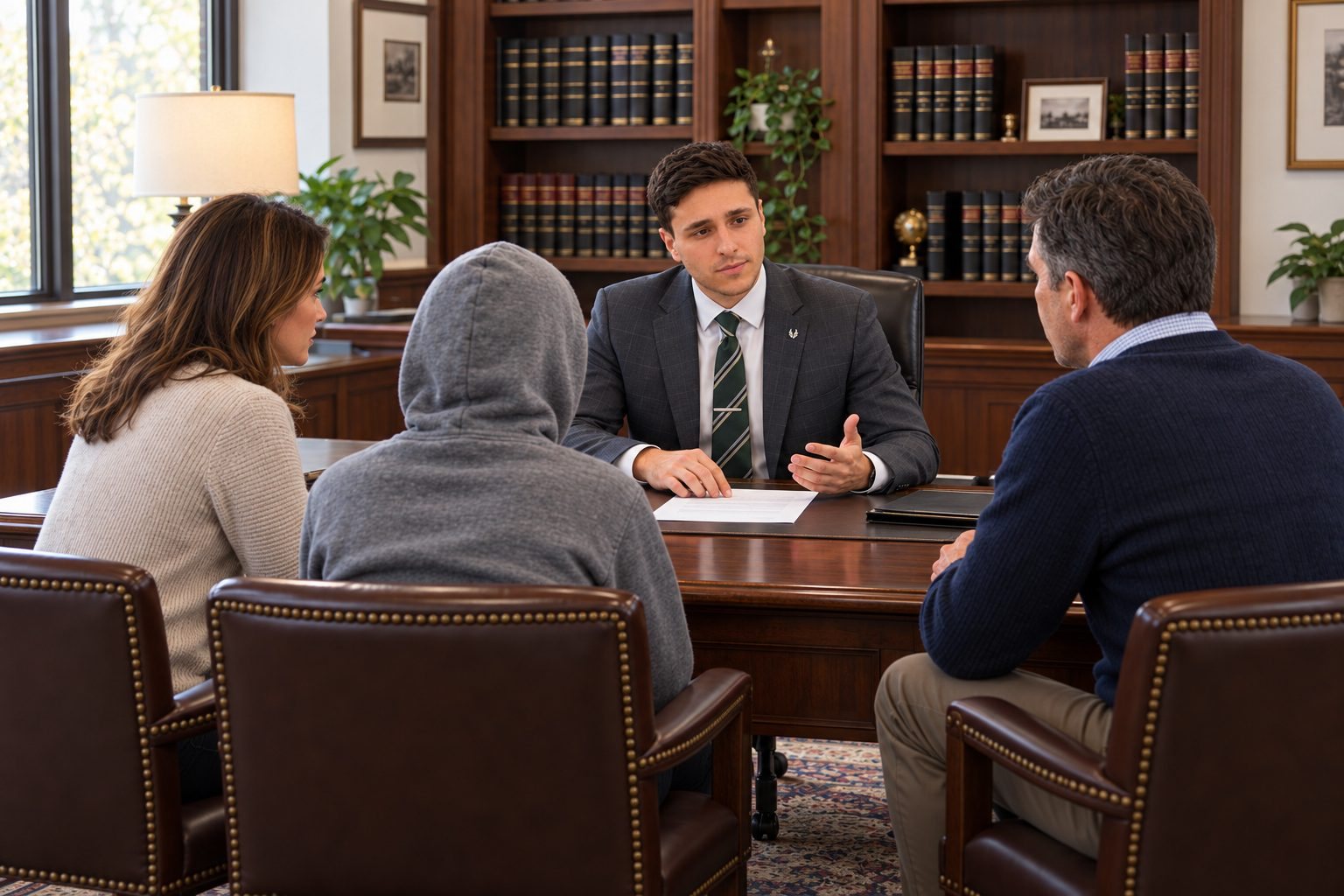
This page is written for a parent or caregiver, and for an older child reading on their own. If you are a young person and the adult hurting you is a parent, you are not in trouble for looking this up. In danger now? Call 911.
Two different doors for a child

| Question | Child's VAWA self-petition | Special Immigrant Juvenile |
|---|---|---|
| Starting point | Abuse by a parent who is a U.S. citizen or green card holder. INA 204(a)(1)(A)(iv), (B)(iii) | A state-court finding of abuse, neglect or abandonment. INA 101(a)(27)(J) |
| Age and marriage | Unmarried and under 21, or until 25 if the abuse was at least one central reason for the delay. INA 204(a)(1)(D)(v) | Under 21 and unmarried. INA 101(a)(27)(J); 8 C.F.R. 204.11 |
| The form | Form I-360 | Form I-360, filed with USCIS |
| Who decides | USCIS | A state court makes the finding; USCIS decides the petition |
| Regulation | 8 C.F.R. 204.2(e) | 8 C.F.R. 204.11 |
The child's VAWA self-petition is explained on abused children and VAWA. A parent who is filing their own VAWA self-petition may also be able to include their children, whether or not the children were abused, under INA 204(a)(1)(A)(iii) and (B)(ii); see children on your petition.
How SIJ works, in outline

Under INA 101(a)(27)(J) and 8 C.F.R. 204.11, as of October 2026, the child must be under 21 and unmarried, with a state juvenile court order finding that:
- reunification with one or both parents is not viable because of abuse, neglect, abandonment or a similar basis; and
- returning to the child's or parents' country is not in the child's best interest.
- The state court case. A family, juvenile or similar state court makes those findings.
- The USCIS petition. With the state-court order in hand, the petition is filed on Form I-360 with USCIS under 8 C.F.R. 204.11.
- The green card. A separate step that follows the classification.
Age matters
The 21st birthday is the outer limit for SIJ, and the state court order has to come first. We do not summarize the green card step here. Do not wait to ask.
The family court side
SIJ depends on a state-court order, and the state court case is its own legal matter with its own rules. Custody, guardianship and related family court work is handled by our parent firm, so the family case and the immigration case stay in one file. The family court case does not decide the immigration case, and the immigration confidentiality rules do not bind a state family court. That last point is the firm's reading of 8 U.S.C. 1367, explained on confidentiality.
If the child is in immigration court
The immigration judge does not decide SIJ. The court is asked to wait while the state court and USCIS act. Start at VAWA in immigration court.
Read next: abused children and VAWA, children on your petition, other paths compared, or divorce, custody and VAWA.
Common questions
What is the difference between SIJ and a child's VAWA petition?
A child's VAWA self-petition requires an abusive parent who is a U.S. citizen or permanent resident, and the child must be unmarried and under 21 under INA 204(a)(1)(A)(iv) and (B)(iii). SIJ under INA 101(a)(27)(J) starts instead from a state-court finding of abuse, neglect or abandonment. Some children qualify for both.
My child turned 21. Is it too late for VAWA?
Not always. Under INA 204(a)(1)(D)(v), a child who turns 21 may still file a VAWA self-petition until age 25 if the abuse was at least one central reason for the delay. SIJ is different: the child must be under 21 and unmarried (INA 101(a)(27)(J); 8 C.F.R. 204.11, as of October 2026).
Does the immigration judge decide SIJ?
No. A state court makes the finding the classification rests on, and USCIS decides the petition. If the child is in removal proceedings, the immigration court is asked to wait while those happen.
The lawyers who will handle your case
One of them calls you back, privately, on your terms.


Talk to a lawyer privately. You decide how we reach you.
Tell us a safe number or email and a safe time, and whether we can leave a message. We never contact the person who hurt you, and we never call from a number or send anything that names this site. The first conversation is free and confidential, in English, Russian, Spanish or Uzbek, with a live interpreter for any other language.